

Timing is one of the most important things to consider when it comes to launching a successful beta test, but maybe not in the way that you think. The moment you introduce your product to users can greatly impact participation, engagement, and your ability to learn from users through the feedback you receive. So, how do you determine the perfect timing? Let’s break it down.
Start Early Rather Than Waiting for the Perfect Moment

The best time to start testing is as soon as you have a functional product. If you wait until everything is fully polished, you risk missing out on valuable feedback that could shape development. Before you launch, there’s one crucial decision to make: What’s your primary goal? Is your beta test focused on improving your product, or is it more about marketing? If your goal is product development, iterative testing will help you refine features, usability, and functionality based on real user feedback.
Beta testing is primarily about making improvements—not just generating hype. However, if your goal is to create buzz, a larger beta test before launch can attract attention and build anticipation. This marketing-driven approach is different from testing designed to refine your product (see Using Your Beta Launch to Go Viral, below).
Make Sure Your Product’s Core Functionality Works
Your product doesn’t need to be perfect, but it should be stable and functional enough for testers to engage with it meaningfully. Major bugs and usability issues should be addressed, and the product should offer enough functionality to gather valuable feedback. The user experience must also be intuitive enough to reduce onboarding friction. Running through the entire test process yourself before launching helps identify any major blockers that could limit the value of feedback. Additionally, make sure testers can access the product easily and get started without unnecessary delays.
At BetaTesting, we emphasize iterative testing rather than waiting for a “seamless user experience.” Our platform is designed to help you gather feedback continuously and improve your product over time.
Iterate, Iterate, Iterate…
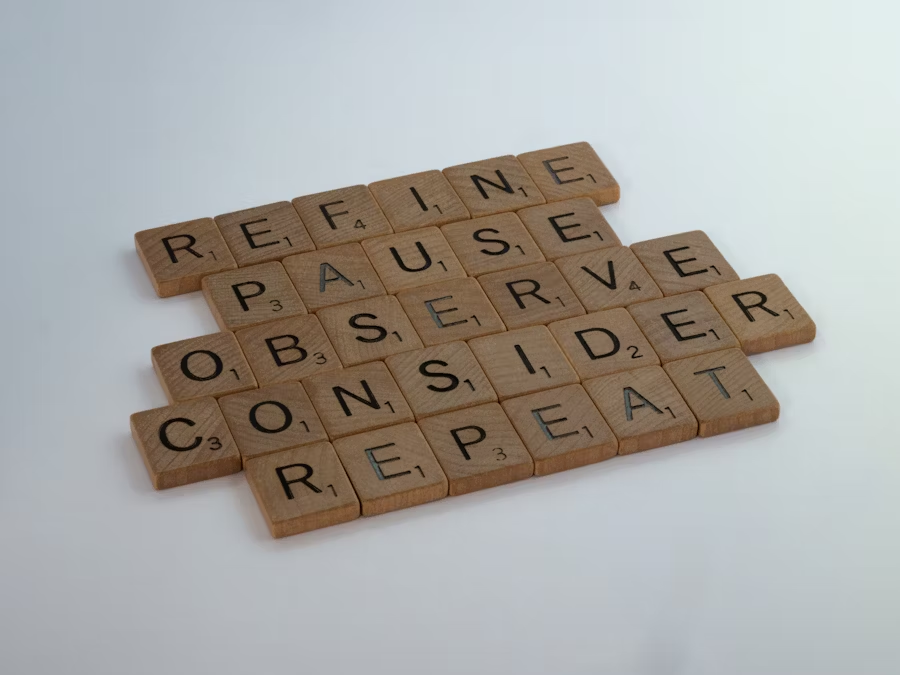
Testing shouldn’t be a one-time event—it should be an ongoing process that evolves with your product. Running multiple test cycles ensures that improvements align with user expectations and that changes are validated along the way. At BetaTesting, we help companies test throughout the entire product development process, from early research to live product improvements. Since we focus on the beta testing phase, we specialize in testing products that are already functional rather than just mockups. Testing is valuable not just before launch but also on an ongoing basis to support user research or validate new features.
Have The Team Ready

A successful beta test requires a dedicated team to manage, analyze, and act on feedback. You should have a team ready to assist testers, a feedback collection and analysis system should be in place, and developers should be on standby to address critical issues. Assigning a single point of contact to oversee the beta test is highly recommended. This person can coordinate with BetaTesting, manage schedules with the development team, and handle tester access.
We also encourage active engagement with testers, as this helps increase participation and ensures quick issue resolution. However, BetaTesting is designed to be easy to use, so if your team prefers to collect feedback and act on it later without real-time interaction, that’s completely fine too.
Align with Your Business Goals
Your beta test should fit seamlessly into your overall product roadmap. If you have an investor pitch or public launch coming up, give yourself enough time to collect and analyze feedback before making final decisions. Planning for adequate time to implement feedback before launch, considering fixed deadlines such as investor meetings or PR announcements, and avoiding last-minute rushes that could compromise testing effectiveness are all essential factors. For situations where quick insights are needed, BetaTesting offers an expedited testing option that delivers results within hours, helping you meet tight deadlines without sacrificing quality.
Using Your Beta Launch to Go Viral
For some companies, a beta launch is viewed more as a marketing event: an opportunity to generate hype and capitalize on FOMO and exclusivity in order to drive more signups and referrals. This can work amazingly well, but it’s important to separate marketing objectives from product-focused objectives. For most companies, your launch is not going to go viral. The road to a great product and successful business is often fraught with challenges and it can often take years to really find product-market fit.
Final Thoughts

Don’t wait to choose the perfect time to start testing. While you can use your beta launch as a marketing tool, we recommend instead focusing most of your effect on testing for the purpose of gathering feedback and improving your product. Think about your product readiness, internal resources, and strategic goals. Iterative testing helps you gather meaningful user feedback, build relationships with early adopters, and set the stage for a successful launch. Start early, stay user-focused, and keep improving—your product (and your users) will thank you!
Have questions? Book a call in our call calendar.
 BetaTesting Blog