

What do you get when you combine real-world users, unfinished software, unpredictable edge cases, and tight product deadlines? Chaos. Unless you know how to manage it. Beta testing isn’t just about collecting feedback; it’s about orchestrating a high-stakes collaboration between your team and real-world users at the exact moment your product is at its most vulnerable.
Done right, managing beta testers is part psychology, part logistics, and part customer experience. This article dives into how leading companies, from Tesla to Slack – turn raw user feedback into product gold. Whether you’re wrangling a dozen testers or a few thousand, these tips will help you keep the feedback flowing, the chaos controlled, and your sanity intact.
Here’s are the 8 tips:
- Clearly Define Expectations, Goals, and Incentives
- Choose the Right Beta Testers
- Effective Communication is Key
- Provide Simple and Clear Feedback Channels
- Let Tester Know they are Heard. Encourage Tester Engagement and Motivation
- Act on Feedback and Close the Loop
- Anticipate and Manage Common Challenges
- Leverage Tools and Automation
1. Clearly Define Expectations, Goals, and Incentives
Clearly articulated goals set the stage for successful beta testing. First, your team should understand the goals so you design the test correctly.
Testers must also understand not just what they’re doing, but why it matters. When goals are vague, participation drops, feedback becomes scattered, and valuable insights fall through the cracks.
Clarity starts with defining what success looks like for the beta: Is it catching bugs? Testing specific features? Validating usability? Then, if you have specific expectations or requirements for testers, ensure you are making those clear: descrbie expectations around participation, how often testers should engage, what kind of feedback is helpful, how long the test will last, and what incentives they’ll get. Offering the right incentives that match with testers time and effort can significantly enhance the recruitment cycle and the quality of feedback obtained.
Defining the test requirements for testers doesn’t mean you need to tell the testers exactly what to do. It just means that you need to ensure that you are communicating the your expectations and requirements to the testers.
Check it out: We have a full article on Giving Incentives for Beta Testing & User Research
Even a simple welcome message outlining these points can make a big difference. When testers know their role and the impact of their contributions, they’re more likely to engage meaningfully and stay committed throughout the process.
2. Choose the Right Beta Testers

Selecting appropriate testers significantly impacts the quality of insights gained. If your goal is to get user-experience feedback, ideally you can target individuals who reflect your end-user demographic and have relevant experience. Your testing goals directly influence your audience selection. For instance, if your primary aim is purely quality assurance or bug hunting, you may not need testers who exactly match your target demographic.
Apple’s approach with the Apple Beta Software Program illustrates effective communication in how the tester’s will impact Apple’s software.
“As a member of the Apple Beta Software Program, you can take part in shaping Apple software by test-driving pre-release versions and letting us know what you think.”
By involving genuinely interested participants, Apple maximizes constructive feedback and ensures testers are motivated by genuine interest.
At BetaTesting, we have more than 450,000 testers in our panel that you can choose from.
Still wondering what type of people beta testers are, and who you should invite? We have a full article on Who Performs Beta Testing?
3. Effective Communication is Key
Regular and clear communication with beta testers is critical for maintaining engagement and responsiveness. From onboarding to post-launch wrap-up, how and when you communicate can shape the entire testing experience. Clear instructions, timely updates, and visible appreciation are essential ingredients in creating a feedback loop that works.
Instead of overwhelming testers with walls of text or sporadic updates, break information into digestible formats: welcome emails, check-in messages, progress updates, and thank-you notes.
Establish a central channel where testers can ask questions, report issues, and see progress. Whether it’s a dedicated Slack group, an email series, or an embedded messaging widget, a reliable touchpoint keeps testers aligned, heard, and engaged throughout the test.
4. Provide Simple and Clear Feedback Channels

Facilitating straightforward and intuitive feedback mechanisms significantly boosts participation rates and feedback quality. If you’re managing your beta program internally, chances are you are using a hodgepodge of tools to make it work. Feedback is likely scattered across emails, spreadsheets, and Google forms. There is where a beta testing platform can help ease headaches and maximize insights.
At BetaTesting, we run formal testing programs where testers have many ways to communicate to the product team and provide feedback. For example, this could be through screen recording usability videos, written feedback surveys, bug reports, user interviews, or communicating directly with the test team through our integrated messages feature.
Such seamless integration of feedback tools, allows testers to provide timely and detailed feedback, improving product iterations.
5. Let Testers know They are Heard. Encourage Tester Engagement and Motivation
One of the primary motivators for beta testers is to play a small role in helping to create great new products. Having the opportunity to have their feedback and ideas genuinely acknowledged and potentially incorporated into a new product is exciting and creates a sense of belonging and accomplishment. When testers feel heard and believe their insights genuinely influence the product’s direction, they become more invested, dedicated, and enthusiastic participants.
Google effectively implements this strategy with the Android Beta Program: “The feedback you provided will help us identify and fix issues, and make the platform even better.”
By explicitly stating the value of tester contributions, Google reinforces the significance of their input, thereby sustaining tester enthusiasm and consistent participation.
Check it out: We have a full article on The Psychology of Beta Testers: What Drives Participation?
6. Act on Feedback and Close the Loop
Demonstrating the tangible impact of tester feedback is crucial for ongoing engagement and trust. Testers want to know that their time and input are making a difference, not disappearing into a void. One of the most effective ways to sustain motivation is by showing exactly how their contributions have shaped the product.
This doesn’t mean implementing every suggestion, but it does mean responding with transparency. Let testers know which features are being considered, which issues are being fixed, and which ideas may not make it into the final release, and why. A simple update like, “Thanks to your feedback, we’ve improved the onboarding flow” can go a long way in reinforcing trust. Publishing changelogs, showcasing top contributors, or sending thank-you messages also helps build a sense of ownership and collaboration.
When testers feel like valued collaborators rather than passive participants, they’re more likely to stick around, provide higher-quality feedback, and even advocate for your product post-launch.
Seeking only positive feedback and cheerleaders is one of the mistakes companies make. We explore them in depth here in this article, Top 5 Mistakes Companies Make In Beta Testing (And How to Avoid Them)
7. Start Small Before You Go Big. Anticipate and Manage Common Challenges

Proactively managing challenges ensures a smoother beta testing experience. For example, Netflix gradually expanded beta testing for their cloud gaming service over time.
“Netflix is expanding its presence in the gaming industry by testing its cloud gaming service in the United States, following initial trials in Canada and the U.K.”
By incrementally scaling testing, Netflix can address issues more effectively, manage resource allocation efficiently, and refine their product based on diverse user feedback.
8. Leverage Tools and Automation
Automating the beta testing process enables scalable and efficient feedback management. Tesla’s approach to beta testing via automated over-the-air updates exemplifies this efficiency:
“Tesla has opened the beta testing version of its Full Self-Driving software to any owner in North America who has bought the software.”
This method allows Tesla to rapidly distribute software updates, manage tester feedback effectively, and swiftly address any identified issues.
At BetaTesting, we offer a full suite of tools to help you manage both your test and your testers. Let’s dive in how we make this happen:
Efficient Screening and Recruiting
BetaTesting simplifies the process of finding the right participants for your tests. With over 100 targeting criteria, including demographics, device types, and user interests, you can precisely define your desired tester profile. Additionally, our platform supports both automatic and manual screening options:
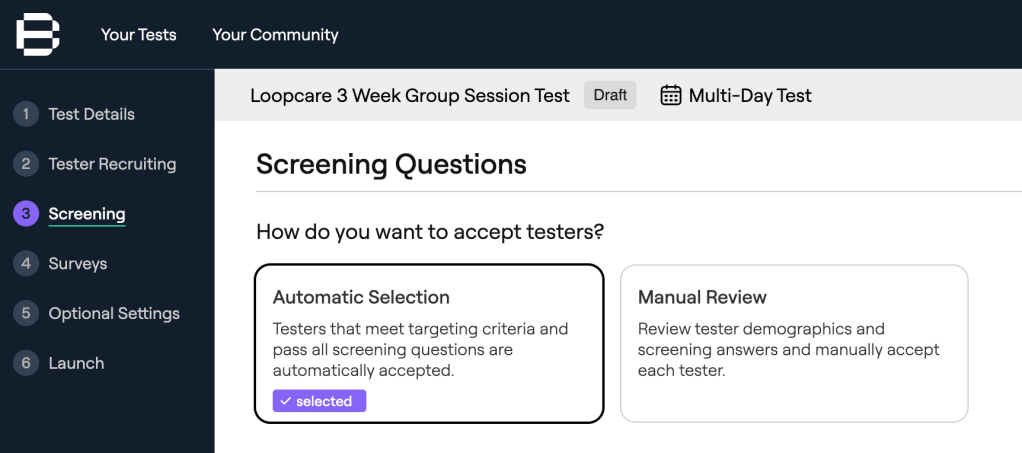
- Automatic Screening: Testers who meet all your predefined criteria are automatically accepted into the test, expediting the recruitment process.
- Manual Review: Provides the flexibility to handpick testers based on their responses to screening questions, demographic information, and device details.
This dual approach ensures that you can efficiently recruit testers who align with your specific requirements.
Managing Large Groups of Testers with Ease
Handling a sizable group of testers is streamlined through BetaTesting’s intuitive dashboard. The platform allows you to:

- Monitor tester participation in real-time.
- Send broadcast messages or individual communications to testers.
- Assign tasks and surveys with specific deadlines.
These tools enable you to maintain engagement, provide timely updates, and ensure that testers stay on track throughout the testing period.
Centralized Collection of Bugs and Feedback
Collecting and managing feedback is crucial for iterative development. BetaTesting consolidates all tester input in one place, including:
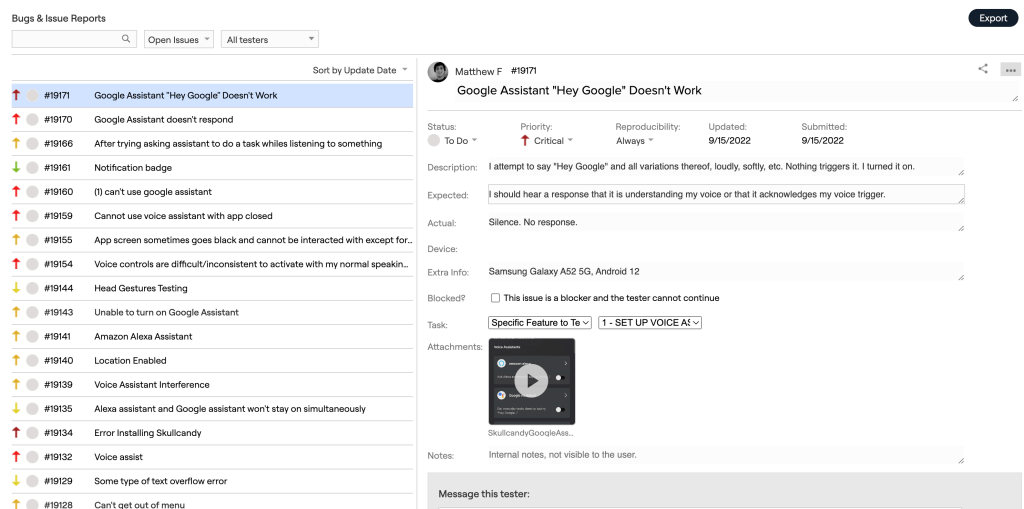
- Survey responses
- Bug reports
- Usability videos
This centralized system facilitates easier analysis and quicker implementation of improvements.
By leveraging BetaTesting’s comprehensive tools, you can automate and scale your beta testing process, leading to more efficient product development cycles.
Conclusion
Managing beta testers isn’t just about collecting bug reports, it’s about building a collaborative bridge between your team and the people your product is meant to serve. From setting clear expectations to closing the feedback loop, each part of the process plays a role in shaping not just your launch, but the long-term trust you build with users.
Whether you’re coordinating with a small group of power users or scaling a global beta program, smooth collaboration is what turns feedback into real progress. Clear communication, the right tools, and genuine engagement don’t just make your testers more effective – they make your product better.
Have questions? Book a call in our call calendar.
 BetaTesting Blog