-
The Psychology of Beta Testers: What Drives Participation?

Product managers and UX researchers often marvel at the armies of eager users who sign up to test unfinished products. What motivates people to devote time and energy to beta testing? In this fun and conversational deep dive, we’ll explore the psychology behind why people become beta testers.
From the thrill of early access to the satisfaction of shaping a product’s future, beta testers have a unique mindset. Understanding their motivations isn’t just interesting trivia – it’s valuable insight that can help you recruit and engage better testers (and make your beta programs more effective).
Here’s what you’ll learn in this article:
- Beyond Freebies: Intrinsic vs. Extrinsic Motivation
- Love and Loyalty: Passionate Product Fans
- The Thrill of Early Access and Exclusivity
- Curiosity, Learning, and Personal Growth
- Having a Voice: Influence and Ownership
- Community and Belonging: The Social Side of Testing
- The Self-Determination Trio: Autonomy, Competence, Relatedness
- Fun, Feedback, and Feeling Valued
- Conclusion: Tapping into Beta Tester Psychology for Better Products
Before we geek out on psychology, let’s set the scene with a real-world fact: beta testing is popular. Big-name companies have millions of users in their beta programs. Even Apple has acknowledged the craze – in 2018, CEO Tim Cook revealed
“We have over four million users participating in our new OS beta programs” – Tim Cook, Apple CEO
That number has likely grown since then! Clearly, something drives all these people to run buggy pre-release software on their devices or spend evenings hunting for glitches. Spoiler: it’s not just about snagging freebies. Let’s unpack the key motivations one by one.
Beyond Freebies: Intrinsic vs. Extrinsic Motivation
In the realm of beta testing, understanding what drives participation is crucial. While intrinsic motivations—such as personal interest, enjoyment, or the desire to contribute—are often highlighted, extrinsic incentives play an equally important role. In fact, offering incentives is not merely a “nice to have” but is a standard practice in testing and user research to gather high-quality feedback.
The Importance of Intrinsic Motivation
Intrinsic motivation refers to engaging in an activity for its inherent satisfaction rather than for some separable consequence. In the context of beta testing, this could manifest as a user’s genuine interest in the product, a desire to contribute to its improvement, or the enjoyment derived from exploring new technologies.
Research has shown that intrinsic motivation is associated with higher quality engagement. According to a study published in the Communications of the ACM, “beta testers are more likely to be early adopters and enthusiasts who are interested in the product’s development and success.” The same study notes that “beta testers tend to provide more detailed and constructive feedback compared to regular users.”
Moreover, intrinsic motivation is linked to sustained engagement over time. As highlighted in a review on intrinsic motivation, “Interest and enjoyment in an activity might boost intrinsic motivation by engendering ‘flow,’ a prolonged state of focus and enjoyment during task engagement.”
The Role of Extrinsic Incentives
While intrinsic motivation is vital, extrinsic incentives—external rewards such as monetary compensation, gift cards, or exclusive access—are equally important in encouraging participation in user research.
Providing incentives is best practice and standard in user research and testing. Incentives facilitate recruiting, boost participation rates but also demonstrate respect for participants’ time and contributions. The Ultimate Guide to User Research Incentives emphasizes,
“By offering incentives, you’re showing your participants that you think their time and insights are worth reimbursing.”
Moreover, the type and amount of incentive can influence the quality of feedback. A study on research incentives notes, “Incentives are the key to achieving a high participation rate. Research shows that incentives can increase study response rate by up to 19%.”
Balancing Intrinsic and Extrinsic Motivations
It’s essential to strike a balance between intrinsic and extrinsic motivations to optimize beta testing outcomes. While extrinsic rewards can enhance participation, providing rewards that are too high may possibly undermine intrinsic motivation—a phenomenon known as the overjustification effect.
The overjustification effect occurs when external incentives diminish a person’s intrinsic interest in an activity. As explained here by a psychologist in a comprehensive article on the topic, “The overjustification effect is a phenomenon in which being offered an external reward for doing something we enjoy diminishes our intrinsic motivation to perform that action.”
Therefore, while incentives are crucial, they should be designed thoughtfully to complement rather than replace intrinsic motivations. For instance, providing feedback that acknowledges participants’ contributions can enhance their sense of autonomy and competence, further reinforcing intrinsic motivation.
Check it out: We have a full article on How To Incentivize Testers in Beta Testing and User Research
Love and Loyalty: Passionate Product Fans

One huge motivator for beta testers is love of the product (or the company behind it). Loyal fans jump at the chance to be involved early. They’re the people who already use your product every day and care deeply about it. For them, beta testing is an honor – a special opportunity to influence something they adore.
As highlighted in a Forbes article,
“Reward loyal customers with the opportunity for a sneak peek. For a customer-facing product, the best way to ensure beta testing gets you the feedback you need is to offer it to your most engaged users.”
Consider the example of a popular video game franchise. When a new sequel enters beta, who signs up? The hardcore fans who have logged 500 hours in the previous game! They love the game and want it to succeed. By beta testing, they can directly contribute to making the game better – which is incredibly fulfilling for a loyal fan. This ties into what psychologists call purpose: the feeling that you’re working toward something meaningful. For passionate users, helping improve a beloved product gives a sense of purpose (and bragging rights, which we’ll get to later).
There’s also a bit of altruism at play here. Loyal beta testers often say they want to make the product better not just for themselves, but for everyone. They take pride in helping the whole user community. In the context of volunteerism research, Susan Ellis describes volunteers as “insider/outsiders” who care about an organization’s success.
“They still think like members of the public but have also made a commitment to your organization, so you can count on their input as based on wanting the best for you and for those you serve. This ability makes them ideal ‘beta testers.’”
In other words, your loyal users-turned-testers bring both an outsider’s perspective and an insider’s passion for your product’s success.
Key takeaway: Many beta testers are your brand’s superfans. They join because they love you. By involving them, you not only get earnest feedback, but you also strengthen their loyalty. It’s a win-win: they feel valued and impactful, and you get the benefit of their dedication. Make sure to acknowledge their passion – a little thank-you shoutout or involving them in feature discussions can validate their intrinsic motivation to help.
The Thrill of Early Access and Exclusivity
Let’s face it: being first is fun. Another big driver for beta testers is the thrill of early access. Humans are naturally curious, and many tech enthusiasts experience serious FOMO (fear of missing out) when there’s a new shiny thing on the horizon. Beta testing offers them a chance to skip the line and try the latest tech or features before the general public.
There’s a social psychology aspect here: exclusivity can create hype and a sense of status.
Remember when Gmail launched in 2004 as an invite-only beta? It became tech’s hottest club. Invites were so coveted that people were literally selling them. At one point, Gmail invitations were selling for $250 apiece on eBay. “It became a bit like a social currency, where people would go, ‘Hey, I got a Gmail invite, you want one?’” said Gmail’s creator, Paul Buchheit.
In this case, being a beta user meant prestige – you had something others couldn’t get yet.
While not every beta is Gmail, the psychology scales down: beta testers often relish the insider status. Whether it’s getting access to a new app, a software update, or a game beta, they enjoy being in the know. On forums and social media, you’ll see testers excitedly share that they’re trying Feature X before launch. It’s a bit of show-and-tell. “Look what I have that you don’t (yet)!”
Importantly, early access isn’t just about boasting – it’s genuinely exciting. New features or products are like presents to unwrap. One enthusiastic tester on a flight sim forum wrote, “I’m just taking a break from doing low-level aerobatics in this baby! God I love being a beta-tester… I get a head start on the mischief/fun 😎”. That pure delight in getting a “head start” captures the sentiment nicely. Curiosity and novelty drive people – they want to explore uncharted territory. Beta testing gives that rush of discovery.
For product managers, recognizing this motivation means you can play up the exclusivity and excitement in your beta invites. Make beta users feel special – because to them, it is special. They’re essentially joining an exclusive adventure. However, a word of caution: exclusivity can be a double-edged sword. If too many people get early access, it feels less special; if too few get in, others feel left out. It’s a balance, but done right (limited invites, referral programs, “ insider” branding), it can supercharge interest and commitment from those who join.
Curiosity, Learning, and Personal Growth
Not all beta testers are longtime loyalists—some are newcomers drawn by curiosity and the chance to learn and be a part of helping a product improve. Beta programs often attract early adopters and tech enthusiasts who simply love exploring how things work. These individuals enjoy tinkering, experimenting, and mastering new tools.
For many, beta testing serves as an educational experience. They can help developers and designers collect valuable insights that help them iterate on the product to enhance the user experience (UX). This hands-on involvement allows testers to deepen their understanding of new technologies.
This motivation aligns with the concept of competence in Self-Determination Theory—the intrinsic desire to feel capable and knowledgeable. Beta tests give them puzzles to solve (finding bugs, figuring out new interfaces) which can be oddly satisfying. Each bug report submitted or tricky feature figured out is a small victory that boosts the tester’s sense of competence. Beta programs can be like a free training ground.
There’s also a career development aspect. Gaining early familiarity with new software or technology can offer a professional edge. Beta testers might position themselves as “power users” or highlight their participation in early testing phases on their resumes, demonstrating initiative and a commitment to innovation. While this isn’t the primary motivator for most, it’s a valuable extrinsic benefit that complements their intrinsic curiosity.
For UX researchers and PMs, if you’ve got a beta tester segment that is there to learn, tap into that. Feed their curiosity: share behind-the-scenes insights, explain the “why” behind design changes, maybe even challenge them with exploratory testing tasks. They’ll eat it up. These testers appreciate feeling like co-creators or explorers rather than just guinea pigs. The more they learn through the process, the more satisfied they’ll be (even if the product isn’t perfect yet).
Having a Voice: Influence and Ownership
One powerful psychological driver for beta testers is the desire to have a voice in the product’s development. Beta testing, at its core, is a form of participatory design—users get to provide input before the product is finalized. Many testers volunteer because they want to influence the outcome. They feel a sense of ownership and empowerment from the ability to say, “I helped shape this.”
This motivation aligns with the need for autonomy and purpose. People want to feel like active contributors, not passive consumers. For instance, Apple’s public beta program attracts millions of users each year, largely because these users want to offer feedback and see Apple implement it. Apple’s software chief, Craig Federighi, acknowledged this, saying, “I agree that the current approach isn’t giving many in the community what they’d like in terms of interaction and influence.” Users crave that influence—even if it’s just the hope that their feedback could steer the product in a better direction.
Real-world case studies abound. Take Microsoft’s Windows Insider Program: it gives Windows enthusiasts early builds of the OS and a Feedback Hub to send suggestions. As Microsoft states, “As a Widows Insider, your feedback can change and improve Windows for users around the world.” Insiders often say they joined because they love Windows and want to make it better. They’ve seen their feedback lead to changes, which is hugely motivating. It creates a virtuous cycle: they give feedback, see it acknowledged, and feel heard, which reinforces their willingness to keep helping. This sense of agency—that their actions matter—is deeply satisfying.
Even when feedback doesn’t always get a personal response (big companies can’t reply to every suggestion), the act of contributing can be fulfilling. Testers will discuss among themselves in forums, speculating on which changes will make it to the final release. There’s a communal sense of “we’re building this together.” In open-source software communities, this feeling is even more pronounced (everyone is essentially a tester/contributor), but it exists in commercial beta tests too.
For product teams, nurturing this motivation means closing the feedback loop. Even if you can’t act on every idea, acknowledge your beta testers’ input. Share a “What we heard” summary or highlight top-voted suggestions and how you’re addressing them. As noted by InfoQ, “Send a follow-up email about something you have implemented based on the user’s feedback. It makes your beta users feel that they can influence the product. They become emotionally attached and loyal.” When testers feel their voice matters, their intrinsic motivation to help skyrockets. They shift from just testers to passionate advocates. That’s pure gold for any product team.
Community and Belonging: The Social Side of Testing

Despite the stereotype of the lone tester working in isolation, beta testing can be a highly social experience. Many individuals join beta programs to connect with like-minded peers and become part of a community. Humans are inherently social creatures; when given a common mission—like improving a product—and a platform to communicate, they naturally form bonds.
Creating dedicated spaces for beta testers, such as Slack or Discord channels, facilitates this connection. These platforms allow testers to discuss the product, share experiences, troubleshoot issues, and even form friendships. It fosters a team atmosphere: “We’re the Beta Squad!”
This sense of community taps into the psychological need for relatedness—feeling connected and part of something larger. Social identity theory suggests that people derive part of their identity from group memberships. Being a “Beta Tester for X” becomes a badge of honor, especially when engaging with others in that group.
Moreover, an active beta community can serve as social proof. When potential testers see a vibrant community around a beta, they’re more likely to join, thinking, “if others are investing their time here, it must be worthwhile.” Enthusiasm is contagious; early beta users sharing their experiences on platforms like Twitter or Reddit can pique others’ curiosity.
From a UX research perspective, leveraging this social aspect can significantly enhance a beta program’s success.Encouraging interaction among testers, providing forums or chat channels, and actively participating as a team can create camaraderie that keeps testers engaged, even when the software is still in development.
As noted by FasterCapital, “A beta testing platform should provide tools and features that enhance the communication and feedback between the product owner and the beta testers, such as chat, forums, notifications… These tools and features can help… increase the engagement and motivation of the beta testers.”
The Self-Determination Trio: Autonomy, Competence, Relatedness
We’ve touched on various psychological theories—now let’s tie them together with Self-Determination Theory (SDT). SDT posits that people are most motivated when three core needs are met: autonomy (control over their actions), competence (feeling skilled and effective), and relatedness (connection to others). Beta testing inherently satisfies these needs:
Autonomy: Beta testers choose to join and participate freely, often exploring features at their own pace and providing feedback on their terms. This sense of volition is motivating—they’re not forced to test; they want to. Having a say in the product’s development further enhances this feeling of agency.
Competence: Navigating pre-release software presents challenges—bugs, confusing interfaces—that testers overcome by reporting issues or finding workarounds. Each resolved issue affirms their skills. Some beta programs gamify this process, tracking the number of bugs reported, which can boost a tester’s sense of expertise.
Relatedness: Through community forums, direct interactions with development teams, or simply knowing they’re part of a beta group, testers feel connected. Sharing a mission with the product team and fellow testers, receiving acknowledgments like “Great catch!” from developers, or seeing others validate their findings fosters a sense of belonging. This sense of community aligns with Self-Determination Theory, which emphasizes relatedness as a core psychological need that enhances intrinsic motivation. Research has shown that environments supporting relatedness can lead to increased engagement and vitality among participants.
According to a study published in the journal Motivation and Emotion, “The theory posits that goal directed behaviours are driven by three innate psychological needs: autonomy… competence… and relatedness… When the three psychological needs are satisfied in a particular context, intrinsic motivation will increase.” PMC
Fun, Feedback, and Feeling Valued

Before we wrap up, it’s worth highlighting that fun is a motivation in itself. Beta testing can be genuinely enjoyable for people who like problem-solving. It’s like being on a scavenger hunt for bugs, or an exclusive preview event where you get to play with new toys. Many beta testers derive simple joy from tinkering. This playful mindset – approaching testing as a game or hobby – means they aren’t just doing it out of duty; they’re having a good time. A conversational, even humorous tone in beta communications (release notes with jokes, friendly competition for “bug of the week”) can amplify this sense of fun.
Additionally, people often continue beta testing because of the positive feedback loop. When testers report issues and see them fixed or see the product improving release by release, it’s rewarding. It shows that their contributions matter. For example, a beta tester might report a nasty crash bug in an app’s beta; in the next update, the bug is gone and the patch notes credit “beta user reports” for the fix. That’s a gratifying moment – “Hey, I helped do that!” This encourages further participation. On the flip side, if feedback seems to disappear into a black hole, testers can lose motivation. So, acknowledging contributions is key to sustaining that momentum.
Finally, feeling valued and recognized is a powerful motivator. Some companies publicly thank their beta communities (in blog posts, or even Easter eggs – e.g., listing tester names in the app credits). Others run beta-exclusive events or give top testers a shout-out. These gestures reinforce that testers are partners in the product’s journey, not just free labor. And when people feel valued, they’re more likely to volunteer again for the next beta cycle.
Conclusion: Tapping into Beta Tester Psychology for Better Products
Beta testers are a fascinating breed. They volunteer their time for a mix of reasons – passion, curiosity, learning, influence, community, and fun – all rooted in deep psychological needs. For product managers and UX researchers, understanding these motivations isn’t just an academic exercise; it has real practical benefits. When you design your beta program with these drives in mind, you create a better experience for testers and get more out of their participation.
Remember, a beta tester who is intrinsically motivated will go above and beyond. They’ll write detailed feedback, evangelize your product to friends, and stick with you even when things crash and break. By contrast, a tester who’s only there for a free gift might do the minimum required. The goal is to attract and nurture the former. Here are a few closing tips to leverage beta tester psychology:
Recruit the Passionate: Emphasize the mission (improve the product for everyone, shape the future) in your beta invite messaging. This appeals to those altruistic, product-loving folks. You’ll attract people who care, not those looking for a quick perk.
Play Up the Exclusivity: Make your beta feel like a special club. Limited spots, “be the first to try XYZ feature,” and invite referrals sparingly. This builds excitement and commitment. Testers will wear their “early access” status with pride.
Foster Community: Provide channels for testers to interact (forums, chat groups) and encourage camaraderie. When testers connect, the testing process becomes more engaging. They’ll help each other and motivate each other to dig deeper.
Empower Their Voice: Facilitating easy and transparent feedback channels is crucial in beta testing. Acknowledging tester input not only validates their contributions but also fosters a sense of community and trust.
According to a study by MoldStud, 76% of users feel more valued when they see their input influence product changes, enhancing their loyalty and willingness to contribute again. By informing testers how their feedback is utilized and keeping them updated on changes based on their suggestions, companies can significantly boost engagement and encourage ongoing participation.
Provide Meaningful Rewards That Correspond with the Effort You’re Asking For: Incentives should be thoughtfully matched to the level of effort required. Asking testers to complete multi-step tasks, submit detailed feedback, or engage in exploratory testing requires time and cognitive energy. In return, offer rewards that show genuine appreciation — whether that’s a generous gift card, early access to premium features, or public recognition. When testers feel the reward is fair and proportional, they’re more likely to go the extra mile, remain engaged, and come back for future betas.
At the end of the day, beta testers participate because they get something out of it that money can’t buy — whether it’s satisfaction, knowledge, social connection, or personal pride. But that doesn’t mean money doesn’t matter. In fact, monetary rewards are just as important, if not more so, than non-monetary incentives when it comes to acknowledging the real value of testers’ time and effort. Paid compensation signals that their contributions are not only appreciated but truly essential. By designing beta programs that feed both psychological satisfaction and provide appropriate compensation, companies create a positive feedback loop for both testers and themselves. The testers feel joy, fulfillment, and fairness; the company gets passionate testers who deliver high-quality feedback. It’s a beautiful symbiosis of human psychology and product development.
So next time you launch a beta, channel these insights. Think of your beta testers not as users doing you a favor, but as enthusiastic partners driven by various psychological incentives. Meet those needs, and you’ll not only get better data – you’ll build an engaged community that will champion your product long after it launches. Happy testing! 🚀
Have questions? Book a call in our call calendar.
-
Top 5 Mistakes Companies Make In Beta Testing (And How to Avoid Them)

Beta testing is a pivotal phase in the software development lifecycle, offering companies invaluable insights into their product’s performance, usability, and market fit. However, missteps during this phase can derail even the most promising products. Let’s delve into the top five mistakes companies often make during beta testing and how to avoid them, supported by real-world examples and expert opinions.
Here’s what you need to avoid:
- Don’t launch your test without doing basic sanity checks
- Don’t go into it without the desire to improve your product
- Don’t test with the wrong beta testers or give the wrong incentives
- Don’t recruit too few or too many beta testers
- Don’t seek only positive feedback and cheerleaders
1. Failing to do sanity tests for your most basic features.
Jumping straight into beta testing without validating that your latest build actually works is a recipe for disaster.
If your app requires taking pictures, but crashes every time someone clicks the button to snap a picture, why are you wasting your time and money on beta testing?!
Set up an internal testing program with your team:
Alpha testing can be done internally to help identify and rectify major bugs and issues before exposing the product to external users. This has been a lesson learned by many in the past, and it’s especially true if you are hoping to get user experience or usability feedback. If your app just doesn’t work, the rest of your feedback is basically meaningless!
Google emphasizes the importance of internal testing:
“Dogfooding is an important part of our test process. Test teams do their best to find problems before dogfooding, but we all know that testing by dedicated testers only goes so far.” – Inc.com
Next, you need to ensure every build goes through a sanity test prior to sending it out to testers
It doesn’t matter if your developers just tweaked one line of code. If something changed in the code, it’s possible it broke the entire app. Before sending out a product to external testers for the purpose of testing or user research, ensure your team has personally tested all the major product features for that exact build. It doesn’t matter if you’ve tested it 1,000 times before, it needs to be tested again from scratch.
How do you avoid this mistake?
Conduct thorough internal testing (alpha phase) to test your product internally before testing externally. Never test a build with testers that your team hasn’t personally tested and validated that the core features work.
2. Don’t go into it without the desire to improve your product

Your goal for testing should be research-related. You should be focused on collecting user feedback and/or data, and resolving issues that ultimately allow you to improve your product or validate that your product is ready for launch. You can have secondary goals, yes. For example, the desire to collect testimonials or reviews you can use for marketing reasons, or beginning to build your user base.
You should have a clear goal about what you plan to accomplish. Without a clear goal and plan for testing, beta testing can become chaotic and difficult to analyze. A lack of structure leads to fragmented or vague feedback that doesn’t help the product team make informed decisions.
How do you avoid this mistake?
Go into it with specific research-related goals. For example: to learn from users so you can improve your product, or to validate that your product is ready for launch. Ideally, you should be OK with either answer – e.g. “No, our product is not ready for launch. We need to either improve it or kill it before we waste millions on marketing.”
3. Don’t Test with the Wrong Beta Testers
Selecting testers who don’t reflect your target market can result in misleading feedback. For instance, many early-stage apps attract tech enthusiasts during open beta—but if your target audience is mainstream users, this can cause skewed insights. Mismatched testers often test differently and expect features your actual users won’t need.
Make sure you’re giving the right incentives that align with your target audience demographics and what you’re asking of testers. For example, if you’re recruiting a specialized professional audience, you need to offer meaningful rewards – you aren’t going to recruit people that make 150K to spend an hour testing for a $15 reward! Also, if your test process is complex, difficult, or just not fun – that matters. You’ll need to offer a higher incentive to get quality participation.
How do you avoid this mistake?
Recruit a tester pool that mirrors your intended user base. Tools like BetaTesting allow you to target and screen testers based on hundreds of criteria (demographic, devices, locations, interests, and many others) to ensure that feedback aligns with your customer segment. Ensure that you’re providing meaningful incentives.
4. Don’t Recruit Too Few or Too Many Beta Testers.

Having too few testers means limited insights and edge-case technical issues will be missed. Conversely, having too many testers is not a great use of resources. It costs more, and there are diminishing returns. At a certain point, you’ll see repetitive feedback that doesn’t add additional value.Too many testers can also overwhelm your team, making feedback difficult to analyze or prioritize insights.
How do you avoid this mistake?
For most tests, focus on iterative testing with groups of 5-100 testers at a time. Beta testing is about connecting with your users, learning, and continuously improving your product. When do you need more? If your goal is real-world load testing or data collection, those are cases where you may need more testers. But in that case, your team (e.g. engineers or data scientists) should be telling you exactly how many people they need and for what reason. It shouldn’t be because you read somewhere that it’s good to have 5,000 testers.
5. Don’t seek only positive feedback and cheerleaders
Negative feedback hurts. After pouring your heart and soul into building a product, negative feedback can feel like a personal attack. Positive feedback is encouraging, and gives us energy and hope that we’re on the right path! So, it’s easy to fall into the trap of seeking out positive feedback and discounting negative feedback.
In reality, it’s the negative feedback that is often most helpful. In general, people have a bias to mask their negative thoughts or hide them altogether. So when you get negative feedback. even when it’s delivered poorly, it’s critical to pay attention. This doesn’t mean that every piece of feedback is valid or that you need to build every feature that’s requested. But you should understand what you can improve, even if you choose not to prioritize it. You should understand why that specific person felt that way, even if you decide it’s not important.
The worst behavior pattern that we see: Seeking positive feedback and validation and discounting or excluding negative feedback. This is a mental/phycological weakness that will not lead to good things.
How do you avoid this mistake?
View negative feedback as an opportunity to learn and improve your product. Most people won’t tell you how they feel. Perhaps this is a good chance to improve something that you’ve always known was a weakness or a problem.
Conclusion
Avoiding these common pitfalls can significantly enhance the effectiveness of your beta testing phase, leading to a more refined product and successful launch. By conducting thorough alpha testing, planning meticulously, selecting appropriate testers, managing tester numbers wisely, and keeping testers engaged, companies can leverage beta testing to its fullest potential.
Have questions? Book a call in our call calendar.
-
Giving Incentives for Beta Testing & User Research

In the realm of user research and beta testing, offering appropriate incentives is not merely a courtesy but a strategic necessity. Incentives serve as a tangible acknowledgment of participants’ time and effort, significantly enhancing recruitment efficacy and the quality of feedback obtained.
This comprehensive blog article delves into the pivotal role of incentives, exploring their types, impact on data integrity, alignment with research objectives, and strategies to mitigate potential challenges such as participant bias and fraudulent responses.
Here’s what you’ll learn in this article:
- The Significance of Incentives in User Research
- Types of Incentives: Monetary and Non-Monetary
- Impact of Incentives on Data Quality
- Aligning Incentives with Research Objectives
- Matching Incentives to Participant Demographics
- Mitigating Fraud and Ensuring Data Integrity
- Best Practices for Implementing Incentives
- Incentives Aren’t Just a Perk—They’re a Signal
The Significance of Incentives in User Research
Incentives play a pivotal role in the success of user research studies, serving multiple critical functions:
1. Enhancing Participation Rates
Most importantly, incentives help researchers recruit participants and get quality results.
Offering incentives has been shown to significantly boost response rates in research studies. According to an article by Tremendous, “Incentives are proven to increase response rates for all modes of research.”
The article sites several research studies and links to other articles like “Do research incentives actually increase participation?” Providing the right Incentives makes it easier to recruit the right people, get high participation rates, and high-quality responses. Overall, they greatly enhance the reliability of the research findings.
2. Recruiting the Right Audience & Reducing Bias
By attracting the right participant pool, incentives mitigate selection bias and ensure your findings are accurate for your target audience.
For example, if you provide low incentives that only appeal to desperate people, you aren’t going to be able to recruit professionals, product managers, doctors, or educated participants.
3. Acknowledging Participant Contribution
Compensating participants reflects respect for their time and insights, fostering goodwill and encouraging future collaboration. As highlighted by People for Research,
“The right incentive can definitely make or break your research and user recruitment, as it can increase participation in your study, help to reduce drop-out rates, facilitate access to hard-to-reach groups, and ensure participants feel appropriately rewarded for their efforts.”
Types of Incentives: Monetary and Non-Monetary

Incentives can be broadly categorized into monetary and non-monetary rewards, each with its own set of advantages and considerations:
Monetary Incentives
These include direct financial compensation such as cash payments, gift cards, or vouchers. Monetary incentives are straightforward and often highly effective in motivating participation. However, the amount should be commensurate with the time and effort required, and mindful of not introducing undue influence or coercion.
As noted in a study published in the Journal of Medical Internet Research, “Research indicates that incentives improve response rates and that monetary incentives are more effective than non-monetary incentives.”
Non-Monetary Incentives
Non-monetary rewards include things like free products (e.g. keep the TV after testing), access to exclusive content, or charitable donations made on behalf of the participant.
The key here is that the incentive should be tangible and offer real value. In general, this means no contests, discounts to buy a product (that’s sales & marketing, not testing & research), swag, or “early access” as the primary incentive if your recruiting participants for the purpose of testing and user research. Those things can be part of the incentive, and they can be very useful as marketing tools for viral beta product launches, but they are not usually sufficient as a primary incentive.
However, this rule doesn’t apply in certain situations:
Well known companies / brands, and testing with your own users
If you have a well-known and desired brand or product with an avid existing base of followers, non monetary incentives can sometimes work great. Offering early access to new features or exclusive content can be a compelling incentive. If Tesla is offering free access to a new product, it’s valuable! But for most startups conducting user research, early access to your product is not usually as valuable as you think it is.
At BetaTesting, we work with many companies, big and small. We allow companies to recruit testers from our own panel of 450,000+ participants, or to recruit from their own users/customers/employees. Sometimes when our customers recruit from their own users and don’t offer an incentive, they get low quality participation. We have seen other times, for example, when we worked with the New York Times, that their existing customers were very passionate and eager to give feedback without any incentive being offered.
Impact of Incentives on Data Quality
While incentives are instrumental in boosting participation, they can also influence the quality of data collected:
- Positive Effects: Appropriate incentives can lead to increased engagement and more thoughtful responses, as participants feel their contributions are valued.
- Potential Challenges: Overly generous incentives may attract individuals primarily motivated by compensation, potentially leading to less genuine responses. Additionally, certain types of incentives might introduce bias; for example, offering product discounts could disproportionately attract existing customers, skewing the sample.
Great Question emphasizes the need for careful consideration:
“Using incentives in UX research can positively influence participant recruitment and response rates. The type of incentive offered—be it monetary, non-monetary, or account credits—appeals to different participant demographics, which may result in various biases.
Aligning Incentives with Research Objectives

A one-size-fits-all approach to incentives rarely works. To truly drive meaningful participation and valuable feedback, your incentives need to align with your research goals. Whether you’re conducting a usability study, bug hunt, or exploratory feedback session, the structure and delivery of your rewards can directly impact the quality and authenticity of the insights you collect.
Task-Specific Incentives
When you’re testing for specific outcomes—like bug discovery, UX issues, or task completions—consider tying your incentives directly to those outputs. This creates clear expectations and motivates participants to dig deeper. Some examples:
- If your goal is to uncover bugs in a new app version, offering a bonus based on the issues reported can encourage testers to explore edge cases and be more thorough. This approach also fosters a sense of fairness, as participants see a direct connection between their effort and their reward. For tests like QA/bug testing, a high quality test result might not include any bugs or failed test cases (that tester may not have encountered any issues!) so, be sure the base reward itself is fair, but that the bonus encourages quality bug reporting.
- If you need each tester to submit 5 photos, the incentive should be directly tied to the submission
- In a multi-day longitudinal test or journal study, you may design tasks and surveys specifically around feedback on features X, Y, Z, etc. It might be important to you to require that testers complete the full test to earn the reward. However, in this case of course the user behavior will not mirror what you can expect to see from your real users. If your goal of the test is to measure how your testers are engaging with your app (e.g. do they return on day 2, day 3, etc), then you definitely don’t want to tie your incentive to a daily participation requirement. Instead, you should encourage organic participation.
Incentives to Encourage Organic / Natural Behavior
If you’re trying to observe natural behavior—say, how users engage with your product over time or how they organically complete tasks—it’s better not to tie incentives to specific actions. Instead, offer a flat participation fee. This prevents you from inadvertently shaping behavior and helps preserve the authenticity of your findings.
This strategy works well in longitudinal studies, journal-based research, or when you want unbiased data around product adoption. It reduces pressure on the participant and allows for more honest feedback about friction points and usability concerns.
This SurveyMonkey article emphasizes the importance of being thoughtful about the type of incentive depending on the study:
“Non-monetary incentives are typically thank you gifts like a free pen or notebook, but can also be things like a brochure or even a charity donation.”
This reinforces that even simple gestures can be effective—especially when they feel genuine and aligned with the study’s tone and goals.
Clarity Is Key
Whatever structure you choose, be clear with your participants. Explain how incentives will be earned, what’s expected, and when they’ll receive their reward. Uncertainty around incentives is one of the fastest ways to lose trust—and respondents.
Aligning your incentive model with your research objectives doesn’t just improve the quality of your data—it shows your participants that you value their time, effort, and insights in a way that’s fair and aligned with your goals.
Matching Incentives to Participant Demographics
Offering incentives is not just about picking a number—it’s about understanding who you’re recruiting and what motivates them. Tailoring your incentives to match participant demographics ensures your offer is compelling enough to attract qualified testers without wasting budget on ineffective rewards.
Professionals and Specialists – When your research involves targeting professionals with unique industry knowledge (e.g.software engineers, doctors, teachers) giving the same incentives that might be offered to general consumers often will not work. In general, the more money that a person makes and the busier they are, the higher the incentive need to be to motivate them to take time out of their day to provide you with helpful feedback.
For these audiences, consider offering higher-value gift cards that correspond with the time required.
A quick aside: Many popular research platforms spread the word about how they offer “fair” incentives to testers. For example, a minimum of $8 per hour. It’s very common for clients to run 5 minute tests on these platforms where the testers get .41 (yes, 41 cents). And these research companies actually brag about that being fair! As a researcher, do you really think you’re targeting professionals, or people that make 100K+, to take a 5 minute test for 41 cents? Does the research platform offer transparency so you can know who the users are? If not, please use some common sense. You have your targeting criteria set to “100K+ developers”, but you’re really targeting desperate people that said they were developers that made 100K+.
General Consumers -For mass-market or B2C products, modest incentives like Amazon or Visa gift cards tend to work well—particularly when the tasks are short and low-effort. In these cases, your reward doesn’t need to be extravagant, but it does need to be meaningful and timely.
It’s also worth noting that digital incentives tend to perform better with younger, tech-savvy demographics.
“Interest in digital incentives is particularly prevalent among younger generations, more digitally-minded people and those who work remotely. As the buying power of Gen Z and millennials grows, as digitally savvy and younger people comprise a larger percentage of the workforce and as employees become more spread apart geographically, it will become increasingly vital for businesses to understand how to effectively motivate and satisfy these audiences.” – Blackhawk Network Research on Digital Incentives.
Mitigating Fraud and Ensuring Data Integrity

While incentives are a powerful motivator in user research, they can also open the door to fraudulent behavior if not managed carefully. Participants may attempt to game the system for rewards, which can skew results and waste time. That’s why implementing systems to protect the quality and integrity of your data is essential. Read our article about how AI impacts fraud in user research.
Screening Procedures
Thorough screening is one of the first lines of defense against fraudulent or misaligned participants.
Effective screeners include multiple-choice and open-ended questions that help assess user eligibility, intent, and relevance to your research goals. Including red herring questions (with obvious correct/incorrect answers) can also help flag inattentive or dishonest testers early.
If you’re targeting professionals or high income individuals, ideally you can actually validate that each participant is who they say they are and that they are a fit for your study. Platforms like BetaTesting allow you to see participant LinkedIn profiles during manual recruiting to provide full transparency.
Monitoring and Verification
Ongoing monitoring is essential for catching fraudulent behavior before or during testing. This includes tracking inconsistencies in responses, duplicate accounts, suspicious IP addresses, or unusually fast task completion times that suggest users are rushing through just to claim an incentive.
At BetaTesting, our tools include IP address validation, ID verification, SMS verification, behavior tracking, and other anti-fraud processes.
Virtual Incentives
Platforms that automate virtual rewards—like gift cards—should still include validation workflows. Tools like Tremendous often include built-in fraud checks or give researchers control to manually approve each reward before disbursement. Also, identity verification for higher-stakes tests is becoming more common.
When managed well, incentives don’t just drive engagement—they reward honest, high-quality participation. But to make the most of them, it’s important to treat fraud prevention as a core part of your research strategy.
Best Practices for Implementing Incentives
To maximize the effectiveness of incentives in user research, consider the following best practices:
- Align Incentives with Participants Expectations: Tailor the type and amount of incentive to match the expectations and preferences of your target demographic.
- Ensure Ethical Compliance: Be mindful of ethical considerations and institutional guidelines when offering incentives, ensuring they do not unduly influence participation.
- Communicate Clearly: Provide transparent information about the nature of the incentive, any conditions attached, and the process for receiving it.
- Monitor and Evaluate: Regularly assess the impact of incentives on participation rates and data quality, adjusting your approach as necessary to optimize outcomes.
By thoughtfully integrating incentives into your user research strategy, you can enhance participant engagement, reduce bias, and acknowledge the valuable contributions of your participants, ultimately leading to more insightful and reliable research outcomes.
Ultimately, the best incentive is one that feels fair, timely, and relevant to the person receiving it. By aligning your reward strategy with participant expectations, you’re not just increasing your chances of participation—you’re showing respect for their time and effort, which builds long-term goodwill and trust in your research process.
Incentives Aren’t Just a Perk—They’re a Signal

Incentives do more than encourage participation—they communicate that you value your testers’ time, input, and lived experience. In a world where people are constantly asked for their feedback, offering a thoughtful reward sets your research apart and lays the foundation for a stronger connection with your users.
Whether you’re running a short usability study or a multi-week beta test, the incentive structure you choose helps shape the outcome. The right reward increases engagement, drives higher-quality insights, and builds long-term trust. But just as important is how well those incentives align—with your goals, your audience, and your product experience.
Because when people feel seen, respected, and fairly compensated, they show up fully—and that’s when the real learning happens.
Now more than ever, as research becomes more distributed, automated, and AI-driven, this human touch matters. It reminds your users they’re not just test subjects in a system. They’re partners in the product you’re building.
And that starts with a simple promise: “Your time matters. We appreciate it.”
Have questions? Book a call in our call calendar.
-
AI Product Validation With Beta Testing
How to use real-world feedback to build trust, catch failures, and improve outcomes for AI-powered tools
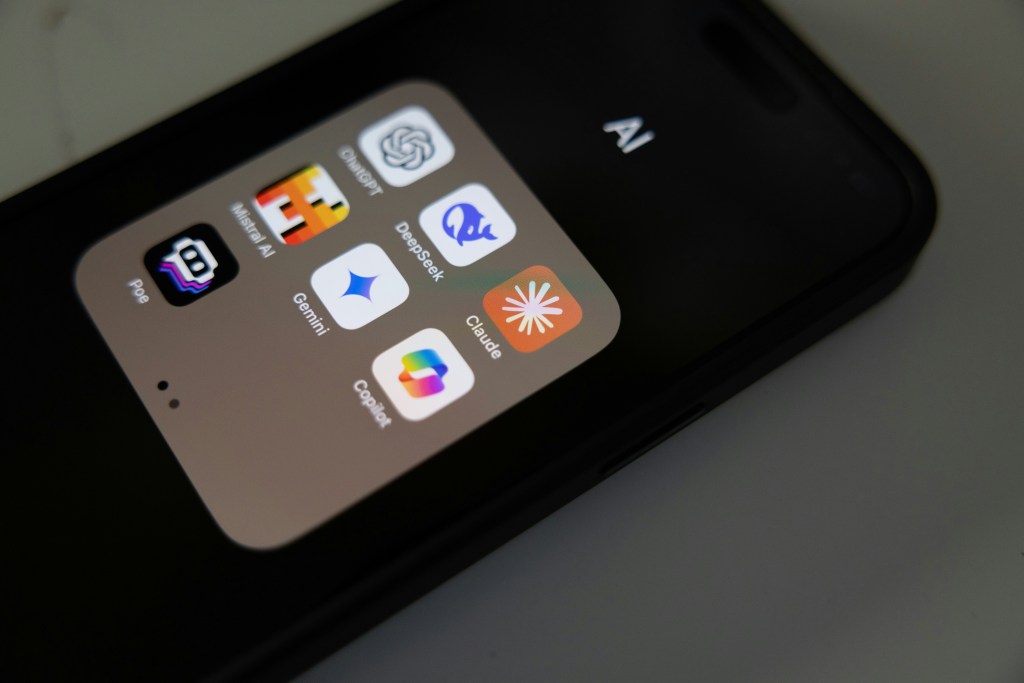
AI products are everywhere—from virtual assistants to recommendation engines to automated code review tools. But building an AI tool that works well in the lab isn’t enough. Once it meets the messiness of the real world—unstructured inputs, diverse users, and edge-case scenarios—things can break quickly.
That’s where beta testing comes in. For AI-driven products, beta testing is not just about catching bugs—it’s about validating how AI performs in real-world environments, how users interact with it, and whether they trust it. It helps teams avoid embarrassing misfires (or ethical PR disasters), improve model performance, and ensure the product truly solves a user problem before scaling.
Here’s what you’ll learn in this article:
- The Unique Challenges of AI Product Testing
- Why Beta Testing Is Essential for AI Validation
- How to Run an AI-Focused Beta Test
- Real-World Case Studies
- Best Practices & Tips for AI Beta Testing
- How We At BetaTesting Can Support Your AI Product Validation?
- AI Isn’t Finished Without Real Users
The Unique Challenges of AI Product Testing

Testing AI products introduces a unique set of challenges. Unlike rule-based systems, AI behavior is inherently unpredictable. Models may perform flawlessly under training conditions but fail dramatically when exposed to edge cases or out-of-distribution inputs.
Take, for instance, an AI text generator. It might excel with standard prompts but deliver biased or nonsensical content in unfamiliar contexts. These anomalies, while rare, can have outsized impacts on user trust—especially in high-stakes applications like healthcare, finance, or mental health.
Another critical hurdle is earning user trust. AI products often feel like black boxes. Unlike traditional software features, their success depends not just on technical performance but on user perceptions—trust, fairness, and explainability. That’s why structured, real-world testing with diverse users is essential to de-risk launches and build confidence in the product.
Why Beta Testing Is Essential for AI Validation
Beta testing offers a real-world proving ground for AI. It allows teams to move beyond lab environments and engage with diverse, authentic users to answer crucial questions: Does the AI perform reliably in varied environments? Do users understand and trust its decisions? Where does the model fail—and why?
Crucially, beta testing delivers qualitative insights that go beyond accuracy scores. By asking users how trustworthy or helpful the AI felt, teams gather data that can inform UX changes, model tweaks, and user education efforts.
It’s also a powerful tool to expose bias or fairness issues before launch. For example, OpenAI’s pre-release testing of ChatGPT involved external red-teaming and research collaboration to flag harmful outputs early—ultimately improving safety and guardrails.
How to Run an AI-Focused Beta Test
A successful AI beta test requires a bit more rigor than a standard usability study.
Start by defining clear objectives. Are you testing AI accuracy, tone detection, or safety? Clarifying what success looks like will help shape the right feedback and metrics.
Recruit a diverse group of testers to reflect varied demographics and usage contexts. This increases your chance of spotting bias, misunderstanding, or misuse that might not show up in a homogeneous test group.
Measure trust and explainability as core metrics. Don’t just look at performance—ask users if they understood what the AI did and why. Did the decisions make sense? Did anything feel unsettling or off?
Incorporate in-app feedback tools that allow testers to flag outputs or behavior in real time. These edge cases are often the most valuable for model improvement.
Grammarly’s rollout of its AI-powered tone detector is a great example. Before launching widely, they invited early users to test the feature. This likely allowed Grammarly to fine-tune its model and improve the UX before full release.
Read about Grammarly’s AI testing processReal-World Case Studies

1. Google Bard’s Initial Demonstration
In February 2023, Google introduced its AI chatbot, Bard. During its first public demo, Bard incorrectly claimed that the James Webb Space Telescope had taken the first pictures of exoplanets. This factual inaccuracy in a high-profile event drew widespread criticism and caused Alphabet’s stock to drop by over $100 billion in market value, illustrating the stakes involved in releasing untested AI to the public. Read the full article here.“This highlights the importance of a rigorous testing process, something that we’re kicking off this week with our Trusted Tester program. We’ll combine external feedback with our own internal testing to make sure Bard’s responses meet a high bar for quality, safety and groundedness in real-world information.” – Jane Park, Google spokesperson
2. Duolingo Max’s GPT-Powered Roleplay
Duolingo integrated GPT-4 to launch “Duolingo Max,” a premium tier that introduced features like “Roleplay” and “Explain My Answer.” Before rollout, Duolingo worked with OpenAI and conducted internal testing This likely included ensuring the AI could respond appropriately, offer meaningful feedback, and avoid culturally inappropriate content. This process helped Duolingo validate that learners felt the AI was both useful and trustworthy.3. Mondelez International – AI in Snack Product Development
Mondelez International, the company behind famous snack brands like Oreo and Chips Ahoy, has been leveraging artificial intelligence (AI) since 2019 to develop new snack recipes more efficiently. The AI tool, developed by Fourkind (later acquired by Thoughtworks), uses machine learning to generate recipes based on desired characteristics such as flavor, aroma, and appearance while also considering factors like ingredient cost, environmental impact, and nutritional value. This approach significantly reduces the time from recipe development to market by four to five times faster compared to traditional trial-and-error methods.
“The tool has been used in the creation of 70 different products manufactured by Mondelez, which also owns Ritz, Tate’s, Toblerone, Cadbury and Clif, including the Gluten Free Golden Oreo” – Read the New York Post article here.
Best Practices & Tips for AI Beta Testing
Running a successful AI beta test requires more than basic usability checks—it demands strategic planning, thoughtful user selection, and a strong feedback loop. Here’s how to get it right:
Define structured goals – before launching your test, be clear about what you’re trying to validate. Are you measuring model accuracy, tone sensitivity, fairness, or explainability? Establish success criteria and define what a “good” or “bad” output looks like. Structured goals help ensure the feedback you collect is actionable and relevant to both your product and your team.
Recruit diverse testers -AI performance can vary widely depending on user demographics, contexts, and behaviors. Cast a wide net by including testers of different ages, locations, technical fluency, cultural backgrounds, and accessibility needs. This is especially important for detecting algorithmic bias and ensuring inclusivity in your product’s real-world use.
Use in-product reporting tools – let testers flag issues right at the moment they occur. Add easy-to-access buttons for reporting when an AI output is confusing, incorrect, or inappropriate. These real-time signals are especially valuable for identifying edge cases and learning how users interpret and respond to your AI.
Test trust, not just output – it’s not enough that the AI gives the “right” answer—users also need to understand it and feel confident in it. Use follow-up surveys to assess how much they trusted the AI’s decisions, whether they found it helpful, and whether they’d rely on it again. Open-ended questions can also uncover user frustration or praise that you didn’t anticipate.
Roll out gradually – launch your AI in stages to reduce risk and improve quality with each wave. Start with small groups and expand as confidence grows. Consider A/B testing different model versions or UI treatments to see what builds more trust and satisfaction.
Act on insights – our beta testers are giving you a goldmine of insight—use it! Retrain your model with real-world inputs, fix confusing UX flows, and adjust language where needed. Most importantly, close the loop. Tell testers what changes were made based on their feedback. This builds goodwill, improves engagement, and makes your future beta programs even stronger.
By integrating these practices, teams can dramatically improve not just the accuracy of their AI systems, but also the user experience, trust, and readiness for a broader release.
How We At BetaTesting Can Support Your AI Product Validation?

BetaTesting helps AI teams go beyond basic feedback collection. Our platform enables teams to gather high-quality, real-world data across global user segments—essential for improving AI models and spotting blind spots.
Collecting Real-World Data to Improve AI Models
Whether you’re training a computer vision algorithm, a voice assistant, or a recommendation engine, you can use BetaTesting to collect:
- Audio, video, and image datasets from real-world environments
- Natural language inputs for fine-tuning LLMs and chatbots
- Sentiment analysis from real users reacting to AI decisions
- Screen recordings showing where users struggle or lose trust
- Detailed surveys measuring confidence, clarity, and satisfaction
Use Case Highlights
Faurecia partnered with BetaTesting to collect real-world, in-car images from hundreds of users across different locations and conditions. These photos were used to train and improve Faurecia’s AI systems for better object recognition and environment detection in vehicles.
Iams worked with BetaTesting to gather high-quality photos and videos of dog nose prints from a wide range of breeds and lighting scenarios. This data helped improve the accuracy of their AI-powered pet identification app designed to reunite lost dogs with their owners.
These real-world examples show how smart beta testing can power smarter AI—turning everyday users into essential contributors to better, more reliable products. Learn more about BetaTesting’s AI capabilities.
AI Isn’t Finished Without Real Users
You can build the smartest model in the world—but if it fails when it meets real users, it’s not ready for primetime.
Beta testing is where theory meets reality. It’s how you validate not just whether your AI functions, but whether it connects, resonates, and earns trust. Whether you’re building a chatbot, a predictive tool, or an intelligent recommendation engine, beta testing gives you something no model can produce on its own: human insight.
So test early. Test often. And most of all—listen.
Because truly smart products don’t just improve over time. They improve with people.
Have questions? Book a call in our call calendar.
-
Beta Testing MVPs to Find Product-Market Fit

Launching a new product is one thing; ensuring it resonates with users is another. In the pursuit of product-market fit (PMF), beta testing becomes an indispensable tool. It allows you to validate assumptions, uncover usability issues, and refine your core value proposition. When you’re working with a Minimum Viable Product (MVP), early testing doesn’t just help you ship faster—it helps you build smarter.
Here’s what you’ll learn in this article:
- Refine Your Target Audience, Test With Different Segments
- When Is Your Product Ready for Beta Testing?
- What Types of Beta Tests Can You Run?
- Avoid Common Pitfalls
- From Insights to Iteration
- Build With Users, Not Just For Them
Refine Your Target Audience, Test With Different Segments
One of the biggest challenges in early-stage product development is figuring out exactly who you’re building for. Beta testing your MVP with a variety of user segments can help narrow your focus and guide product decisions. Begin by defining your Ideal Customer Profile (ICP) and breaking it down into more general testable target audience groups groups based on demographics, interests, employment info, product usage, or whatever criteria is most important for you.
For example, Superhuman, the email client for power users, initially tested across a broad user base. But through iterative beta testing, they identified their most enthusiastic adopters: tech-savvy professionals who valued speed, keyboard shortcuts, and design. Read how they built Superhuman here.
By comparing test results across different segments, you can prioritize who to build for, refine messaging, and focus development resources where they matter most.
When Is Your Product Ready for Beta Testing?

The short answer: probably yesterday.
You don’t need a fully polished product. You don’t need a flawless UX. You don’t even need all your features live. What you do need is a Minimum Valuable Product—not just a “Minimum Viable Product.”
Let’s unpack that.
A Minimum Viable Product is about function. It asks: Can it run? Can users get from A to B without the app crashing? It’s the version of your product that technically works. But just because it works doesn’t mean it works well—or that anyone actually wants it.
A Minimum Valuable Product, on the other hand, is about learning. It asks: Does this solve a real problem? Is it valuable enough that someone will use it, complain about it, and tell us how to make it better? That’s the sweet spot for beta testing. You’re not looking for perfection—you’re looking for traction.
The goal of your beta test isn’t to impress users. It’s to learn from them. So instead of waiting until every feature is built and pixel-perfect, launch with a lean, focused version that solves one core problem really well. Let users stumble. Let them complain. Let them show you what matters.
Just make sure your MVP doesn’t have any show-stopping bugs that prevent users from completing the main flow. Beyond that? Launch early, launch often, and let real feedback shape the product you’re building.
Because the difference between “viable” and “valuable” might be the difference between a launch… and a lasting business.
What Types of Beta Tests Can You Run?
Beta testing offers a versatile toolkit to evaluate and refine your product. Depending on your objectives, various test types can be employed to gather specific insights. Here’s an expanded overview of these test types, incorporating real-world applications and referencing BetaTesting’s resources for deeper understanding:
Bug Testing
Also known as a Bug Hunt, this test focuses on identifying technical issues within your product. Testers explore the application, reporting any bugs they encounter, complete with device information, screenshots, and videos. This method is invaluable for uncovering issues across different devices, operating systems, and browsers that might be missed during in-house testing.
Usability Testing
In this approach, testers provide feedback on the user experience by recording their screens or providing selfie videos while interacting with your product. They narrate their thoughts, highlighting usability issues, design inconsistencies, or areas of confusion. This qualitative data helps in understanding the user’s perspective and improving the overall user interface.
Survey-Based Feedback
This method involves testers using your product and then completing a survey to provide structured feedback. Surveys can include a mix of qualitative and quantitative questions, offering insights into user satisfaction, feature preferences, and areas needing improvement. BetaTesting’s platform allows you to design custom surveys tailored to your specific goals.
Multi-Day Tests
These tests span several days, enabling you to observe user behavior over time. Testers engage with your product in their natural environment, providing feedback at designated intervals. This approach is particularly useful for assessing long-term usability, feature adoption, and identifying issues that may not surface in single-session tests.
User Interviews
Moderated User Interviews involve direct interaction with testers through scheduled video calls. This format allows for in-depth exploration of user experiences, motivations, and pain points. It’s especially beneficial for gathering detailed qualitative insights that surveys or automated tests might not capture. BetaTesting facilitates the scheduling and conducting of these interviews.
By strategically selecting and implementing these beta testing methods, you can gather comprehensive feedback to refine your product, enhance user satisfaction, and move closer to achieving product-market fit.
You can learn about BetaTesting test types here in this article, Different Test Types Overview
Avoid Common Pitfalls

Beta testing is one of the most powerful tools in your product development toolkit—but only when it’s used correctly. Done poorly, it can lead to false confidence, missed opportunities, and costly delays. To make the most of your beta efforts, it’s critical to avoid a few all-too-common traps.
Overbuilding Before Feedback
One of the most frequent mistakes startups make is overengineering their MVP before ever putting it in front of users. This often leads to wasted time and effort refining features that may not resonate with the market. Instead of chasing perfection, teams should focus on launching a “Minimum Valuable Product”—a version that’s good enough to test the core value with real users.
This distinction between “valuable” and “viable” is critical. A feature-packed MVP might seem impressive internally, but if it doesn’t quickly demonstrate its core utility to users, it can still miss the mark. Early launches give founders the opportunity to validate assumptions and kill bad ideas fast—before they become expensive distractions.
Take Superhuman, for example. Rather than racing to build everything at once, they built an experience tailored to a core group of early adopters, using targeted feedback loops to improve the product one iteration at a time. Their process became a model for measuring product-market fit intentionally, rather than stumbling upon it.
Ignoring Early Negative Signals
Beta testers offer something few other channels can: honest, early reactions to your product. If testers are disengaged, confused, or drop off early, those aren’t random anomalies—they’re warning signs.
Slack is a textbook case of embracing these signals. Originally built as a communication tool for the team behind a failed online game, Slack only became what it is today because its creators noticed how much internal users loved the messaging feature. Rather than cling to the original vision, they leaned into what users were gravitating toward.
“Understanding user behavior was the catalyst for Slack’s pivot,” as noted in this Medium article.
Negative feedback or disinterest during beta testing might be uncomfortable, but it’s far more useful than polite silence. Listen closely, adapt quickly, and you’ll dramatically increase your chances of building something people actually want.
Recruiting the Wrong Testers
You can run the best-designed test in the world, but if you’re testing with the wrong people, your results will be misleading. Beta testers need to match your target audience. If you’re building a productivity app for remote knowledge workers, testing with high school students won’t tell you much.
It’s tempting to cast a wide net to get more feedback—but volume without relevance is noise. Targeting the right audience helps validate whether you’re solving a meaningful problem for your intended users.
To avoid this, get specific. Use targeted demographics, behavioral filters, and screening questions to ensure you’re talking to the people your product is actually meant for. If your target audience is busy parents or financial analysts, design your test and your outreach accordingly.
Failing to Act on Findings
Finally, the most dangerous mistake of all is gathering great feedback—and doing nothing with it. Insight without action is just noise. Teams need clear processes for reviewing, prioritizing, and implementing changes based on what they learn.
That means not just reading survey responses but building structured workflows to process them.
Tools like Dovetail, Notion, or even Airtable can help turn raw feedback into patterns and priorities.
When you show testers that their feedback results in actual changes, you don’t just improve your product—you build trust. That trust, in turn, helps cultivate a loyal base of early adopters who stick with you as your product grows.
From Insights to Iteration
Beta testing isn’t just a checkbox you tick off before launch—it’s the engine behind product improvement. The most successful teams don’t just collect feedback; they build processes to act on it. That’s where the real value lies.
Think of beta testing as a continuous loop, not a linear process. Here’s how it works:
Test: Launch your MVP or new feature to real users. Collect their experiences, pain points, and observations.
Learn: Analyze the feedback. What’s confusing? What’s broken? What do users love or ignore? Use tools like Dovetail for tagging and categorizing qualitative insights, or Airtable/Notion to organize feedback around specific product areas.
Iterate: Prioritize your learnings. Fix what’s broken. Improve what’s clunky. Build what’s missing. Share updates internally so the whole team aligns around user needs.
Retest: Bring those changes back to users. Did the fix work? Is the feature now useful, usable, and desirable? If yes—great. If not—back to learning.
Each round makes your product stronger, more user-centered, and closer to product-market fit. Importantly, this loop is never really “done.” Even post-launch, you’ll use it to guide ongoing improvements, reduce churn, and drive adoption.
Superhuman – the premium email app, famously built a system to measure product-market fit using Sean Ellis’ question: “How disappointed would you be if Superhuman no longer existed?” They only moved forward after more than 40% of users said they’d be “very disappointed.” But they didn’t stop there—they used qualitative feedback from users who weren’t in that bucket to understand what was missing, prioritized the right features, and iterated rapidly.The lesson? Beta testing is only as powerful as what you do after it. Check the full article here.
Build With Users, Not Just For Them
Product-market fit isn’t discovered in isolation. Finding product-market fit isn’t a milestone you stumble into—it’s something you build, hand-in-hand with your users. Every bug report, usability hiccup, or suggestion is a piece of the puzzle, pointing you toward what matters most. Beta testing isn’t just about polishing what’s already there—it’s about shaping what’s next.
When you treat your early users like collaborators instead of just testers, something powerful happens: they help you uncover the real magic of your product. That’s how Superhuman refined its feature set – by listening, learning, and looping.
The faster you start testing, the sooner you’ll find what works. And the deeper you engage with real users, the more confident you’ll be that you’re building something people want.
So don’t wait for perfect. Ship what’s valuable, listen closely, and iterate with purpose. The best MVPs aren’t just viable – they’re valuable. And the best companies? They build alongside their users every step of the way.
Have questions? Book a call in our call calendar.
-
AI-Powered User Research: Fraud, Quality & Ethical Questions

This article is part of a series of articles focused on AI in user research. To get started, read about the State of AI in User Research and Testing in 2025.
AI is transforming how companies conduct user research and software testing. From automating tedious analysis to surfacing insights at lightning speed, the benefits are real—and they’re reshaping how teams build, test, and launch products. But with that transformation comes a new layer of complexity.
We’re entering an era where AI can write surveys, analyze video feedback, detect bugs, and even simulate participants. It’s exciting—but also raises serious questions: What happens when the testers aren’t real? Can you trust feedback that’s been filtered—or even generated—by AI? And what ethical guardrails should be in place to ensure fairness, transparency, and integrity?
As AI grows more human-like in how it speaks, behaves, and appears, the line between authentic users and synthetic actors becomes increasingly blurred. And when the research driving your product decisions is based on uncertain sources, the risk of flawed insights grows dramatically.
Here’s what you’ll learn in this article:
- Trust and Identity Verification in an AI-Driven World
- Loss of Creativity & Depth in Research
- Bias in AI-Driven Research & Testing
- Transparency & Trust in AI-Driven Research
- Job Displacement: Balancing Automation with Human Expertise
- The Risk of Fake User Counts & Testimonials
- The Ethics of AI in Research: Where Do We Go From Here?
Trust and Identity Verification in an AI-Driven World

Note: This person does not exist! As AI gets smarter and more human-like, one of the biggest questions we’ll face in user research is: Can we trust that what we’re seeing, hearing, or interacting with is actually coming from a real person? With AI now capable of generating human-like voices, hyper-realistic faces, and entire conversations, it’s becoming harder to distinguish between authentic human participants and AI-generated bots.
This isn’t hypothetical—it’s already happening. Tools like ChatGPT and Claude can hold detailed conversations, while platforms like ElevenLabs can clone voices with startling accuracy, and This Person Does Not Exist generates realistic profile photos of people who don’t exist at all (ThisPersonDoesNotExist). As impressive as these technologies are, they also blur the line between real and synthetic behavior, and that poses a significant risk for research and product testing.
“Amazon is filled with fake reviews and it’s getting harder to spot them”, from CNBC. And that was from 2020, before the rise of AI.
Across the web, in platforms like Amazon, YouTube, LinkedIn and Reddit, there’s growing concern over bots and fake identities that engage in discussions, test products, and even influence sentiment in ways that appear completely human.
In research settings, this could mean collecting feedback from non-existent users, making flawed decisions, and ultimately losing trust in the insights driving product strategy.
That’s why identity verification is quickly becoming a cornerstone of trust in user research. Tools like Onfido and Jumio are leading the charge by helping companies verify participants using government-issued IDs, biometrics, and real-time facial recognition (Onfido, Jumio). These technologies are already standard in high-stakes industries like fintech and healthcare—but as AI-generated personas become more convincing, we’ll likely see these safeguards expand across every area of digital interaction.
For companies conducting user research and testing, it’s critical to have confidence that you’re testing with the right audience. At BetaTesting, we’ve implemented robust anti-fraud and identity controls, including identity verification, IP validation, SMS validation, no VPNs allowed for testers, behavioral analysis, and more. We’ve seen fraud attempts increasing first hand over the years, and we have built tools ensure we address the issue head-on and continue to focus on participant quality.
Looking ahead, identity verification won’t just be a nice-to-have—it’ll be table stakes. Whether you’re running a beta test, collecting user feedback, or building an online community, you’ll need ways to confidently confirm that the people you’re hearing from are, in fact, people.
In a world where AI can walk, talk, type, and even smile like us, the ability to say “this is a real human” will be one of the most valuable signals we have. And the platforms that invest in that trust layer today will be the ones that thrive tomorrow.
Loss of Creativity & Depth in Research

While AI excels at identifying patterns in data, it struggles with original thought, creative problem-solving, and understanding the nuance of human experiences. This is a key limitation in fields like user research, where success often depends on interpreting emotional context, understanding humor, recognizing cultural cues, and exploring new ideas—areas where human intuition is essential.
Text based AI-analysis tools can efficiently categorize and summarize feedback, but they fall short in detecting sarcasm, irony, or the subtle emotional undertones that often carry significant meaning in user responses. These tools rely on trained language models that lack lived experience, making their interpretations inherently shallow.
“Is empathy the missing link in AI’s cognitive function? Thinking with your head, without your heart, may be an empty proposition.” (Psychology Today)
Organizations that lean too heavily on AI risk producing surface-level insights that miss the richness of real user behavior, which can lead to flawed decisions and missed opportunities for innovation. True understanding still requires human involvement—people who can read between the lines, ask the right follow-up questions, and interpret feedback with emotional intelligence.
Bias in AI-Driven Research & Testing
AI models are only as objective as the data they’re trained on. When datasets reflect demographic, cultural, or systemic biases, those biases are not only preserved in the AI’s output—they’re often amplified. This is especially problematic in user research and software testing, where decisions based on flawed AI interpretations can affect real product outcomes and user experiences.
Amazon famously scrapped its AI recruiting tool that showed bias against Women.
“If an algorithm’s data collection lacks quantity and quality, it will fail to represent reality objectively, leading to inevitable bias in algorithmic decisions.“ This research article from Nature reports on how discrimination in artificial intelligence-enabled recruitment practices exist because their training data is often drawn from past hiring practices that carried historical bias.
Similarly, Harvard Business Review highlighted how AI sentiment analysis tools can misinterpret responses due to an inability to understand nuances with language, tone, and idioms. This leads to inaccurate sentiment classification, which can distort research insights and reinforce cultural bias in product development (Harvard Business Review).
To reduce bias, companies must regularly audit AI systems for fairness, ensure that models are trained on diverse, representative data, and maintain human oversight to catch misinterpretations and anomalies. Without these checks in place, AI-powered research may reinforce harmful assumptions instead of surfacing objective insights.
Transparency & Trust in AI-Driven Research
As AI becomes more deeply integrated into research, transparency is no longer optional—it’s essential. Participants and stakeholders alike should understand how AI is used, who is behind the analysis, and whether human review is involved. Transparency builds trust, and without it, even the most advanced AI tools can sow doubt.
Among those who’ve heard about AI, 70% have little to no trust in companies to make responsible decisions about how they use it in their products. (Pew Research).
To maintain transparency, companies should clearly state when and how AI is used in their research and user testing processes. This includes disclosing the extent of human involvement, being upfront about data sources, and ensuring participants consent to AI interaction. Ethical use of AI starts with informed users and clear communication.
Job Displacement: Balancing Automation with Human Expertise
One of the most prominent concerns about AI in research and software testing is its potential to displace human professionals. AI has proven to be highly effective in automating repetitive tasks, such as analyzing large datasets, summarizing survey results, detecting bugs, and generating basic insights. While this efficiency brings clear productivity gains, it also raises concerns about the long-term role of human researchers, analysts, and QA testers.
A 2023 report from the World Economic Forum projected that AI and technology automation will be the biggest factor in displacing up to 83 million jobs globally by 2025 – Read full report here
However, the same report highlighted a more optimistic side: an estimated 69 million new jobs could emerge, with popular growing roles including: Data Analysts/Scientists, AI and Machine Learning Specialists, and Digital Transformation Specialists
This duality underlines an important truth: AI should be seen as a collaborative tool, not a replacement. Companies that effectively balance automation with human expertise can benefit from increased efficiency while preserving critical thinking and innovation. The most successful approach is to use AI for what it does best—speed, scale, and consistency—while entrusting humans with tasks that demand creativity, ethical reasoning, and user empathy.
The Risk of Fake User Counts & Testimonials

AI can generate highly realistic synthetic content, and while this technology has productive uses, it also opens the door to manipulated engagement metrics and fake feedback. In research and marketing, this presents a significant ethical concern.
A 2023 report by the ACCC found that approximately one in three online reviews may be fake, often generated by bots or AI tools. These fake reviews mislead consumers and distort public perception, and when used in research, they can invalidate findings or skew user sentiment. The FTC also recently banned fake review/testimonials.
In product testing, synthetic users can create false positives, making products appear more successful or more user-friendly than they really are. If left unchecked, this undermines the authenticity of feedback, leading to poor product decisions and damaged customer trust.
To maintain research integrity, companies should distinguish clearly between real and synthetic data, and always disclose when AI-generated insights are used. They should also implement controls to prevent AI from producing or spreading fake reviews, testimonials, or inflated usage data.
The Ethics of AI in Research: Where Do We Go From Here?
As AI becomes a staple in research workflows, companies must adopt ethical frameworks that emphasize collaboration between human expertise and machine intelligence. Here’s how they can do it responsibly:
Responsible AI Adoption means using AI to augment—not replace—human judgment. AI is powerful for automation and analysis, but it lacks the intuition, empathy, and real-world perspective that researchers bring. It should be used as a decision-support tool, not as the final decision-maker.
AI as a Research Assistant, Not a Replacement is a more realistic and productive view. AI can take on repetitive, time-consuming tasks like data aggregation, pattern detection, or automated transcription, freeing up humans to handle interpretation, creative problem-solving, and ethical oversight.
Ethical Data Use & Transparency are critical to building trust. Companies must ensure fairness in AI-driven outputs, openly communicate how AI is used, and take full accountability for its conclusions. Transparency also involves participant consent and ensuring data collection is secure and respectful.
AI & Human Collaboration should be the guiding principle. When researchers and machines work together, they can unlock deeper insights faster and at scale. The key is ensuring AI tools are used to enhance creativity, not limit it—and that human voices remain central to the research process.
Final Thoughts
AI is reshaping the future of user research and software testing—and fast. But for all the speed, automation, and scalability it brings, it also introduces some very human questions: Can we trust the data? Are we losing something when we remove the human element? What’s the line between innovation and ethical responsibility?
The truth is, AI isn’t the villain—and it’s not a silver bullet either. It’s a tool. A powerful one. And like any tool, the value it delivers depends on how we use it. Companies that get this right won’t just use AI to cut corners—they’ll use it to level up their research, spot issues earlier, and make better decisions, all while keeping real people at the center of the process.
So, whether you’re just starting to experiment with AI-powered tools or already deep into automation, now’s the time to take a thoughtful look at how you’re integrating AI into your workflows. Build with transparency. Think critically about your data. And remember: AI should work with your team—not replace it.
Ethical, human-centered AI isn’t just the right move. It’s the smart one.
Have questions? Book a call in our call calendar.
-
AI in User Research & Testing in 2025: The State of The Industry

Artificial Intelligence (AI) is rapidly transforming the way companies conduct user research and software testing. From automating surveys and interview analysis to detecting and fixing vulnerabilities and bugs before software is released, AI has made research and testing more efficient, scalable, and insightful. However, as with any technological advancement, AI comes with limitations, challenges, and ethical concerns that organizations must consider.
Here’s what you’ll learn in this article:
- How AI is Used in User Research & Software Testing in 2025
- How Effective is AI in User Research & Software Testing?
- An AI Bot Will Never be a Human: Challenges & Limitations of AI
- Beware of Fraud and Ethical Issues of Using AI in User Research & Marketing
- The Best Way to Use AI in User Research & Software Testing
- The Future of AI in User Research & Software Testing
AI is already making a significant impact in user research and software testing, helping teams analyze data faster, uncover deeper insights, and streamline testing processes. Here are some of the most common applications:
How AI is Used in User Research in 2025
User research often involves analyzing large volumes of qualitative feedback from interviews, surveys, and product usage data: a process that AI is helping to streamline. AI-powered tools can automate transcription, sentiment analysis, survey interpretation, and even simulate user behavior, allowing researchers to process insights more efficiently while focusing on strategic decision-making.
Survey Feedback Analysis & Summarization
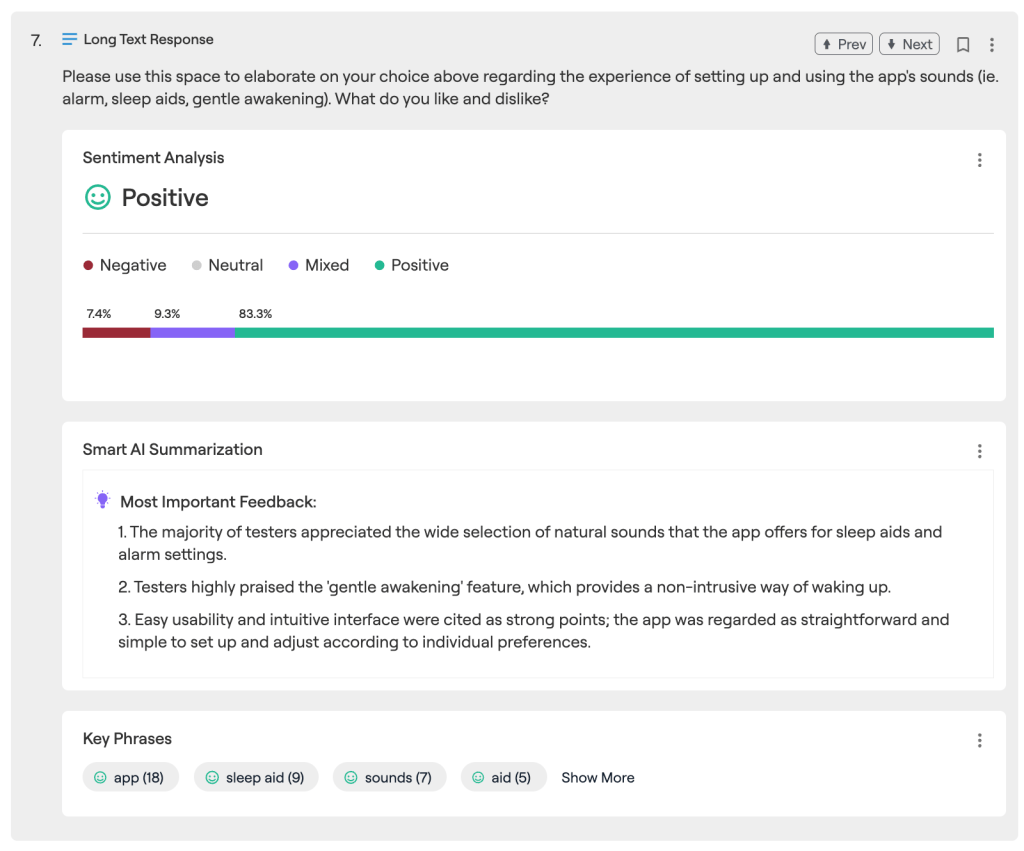
An example of some of BetaTesting.com’s built-in AI survey analysis AI tools can help categorize, summarize, and annotate survey responses, allowing researchers to extract instant insights instead of manually reviewing thousands of answers. While very effective, AI-generated insights still require human review to ensure accuracy and capture nuance.
Examples: Most survey platforms include AI analysis features, including Qualtrics, SurveyMonkey, and our own survey tool on BetaTesting.
Automated Transcription (in Videos or Audio)
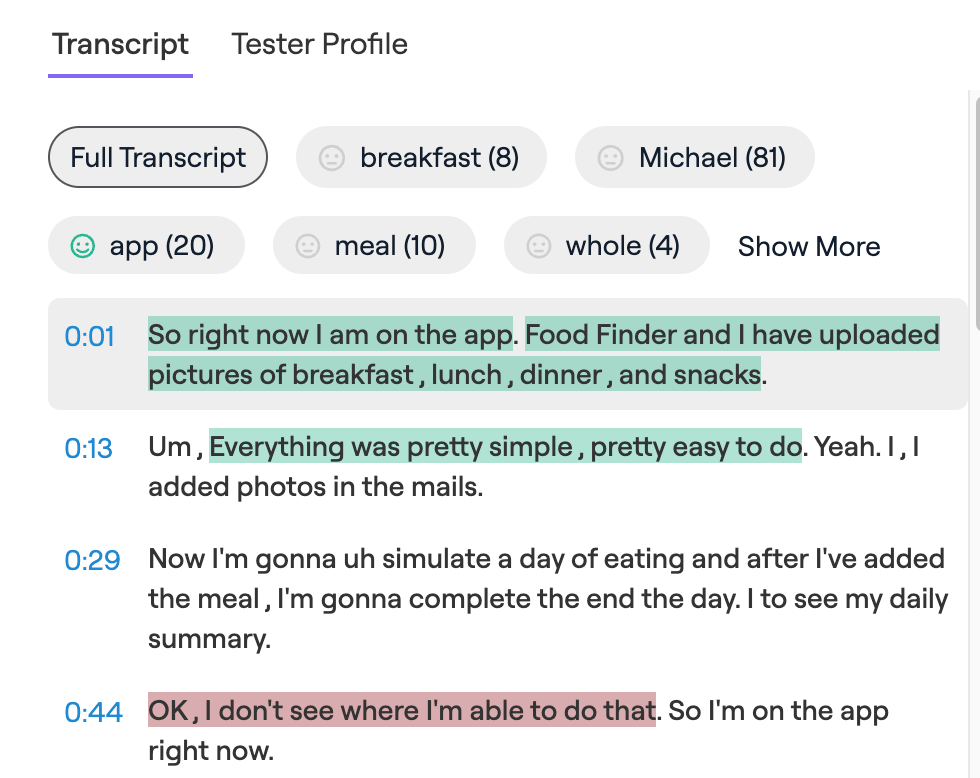
Transcription is the process of converting audio into written words.It wasn’t that long ago that user researchers had to manually transcribe video recordings associated with user interviews and usability videos. Now, videos and audio are automatically transcribed by many tools and research platforms, saving countless hours and even providing automatic language translation, feedback, and sentiment analysis. This allows researchers to more easily identify key themes and trends across large datasets.
Check it out: Audio transcription tools include products like Otter.ai, Sonix.ai, and ChatGPT’s Speech to Text, and countless developer APIs like ChatGPTs Audio API, Amazon Transcribe, and Google Cloud’s Speech-to-Text and Video Intelligence APIs.
Automated Video Analysis

An example of some of BetaTesting.com’s AI video analysis tool Transcribing video is just the tip of the iceberg. After getting a transcription, AI tools can then analyze the feedback for sentiment, categorize and annotate videos, and provide features that make it easier for humans to stream and analyze videos directly. In addition, audio analysis and video analysis tools can detect tone, emotion, facial expressions, and more.
Check it out: Great examples include Loom’s AI video analysis functionality, and our own AI video analysis tool on BetaTesting.
Feedback Aggregation into Research Repositories
Using some of the functionality outlined above, AI can help analyze, tag, categorize, and summarize vast amounts of data. AI can help take both unstructured (e.g. videos or call transcripts) and structured data (e.g. surveys, forms) in a wide variety of formats, and make the data structured and searchable in a standard way. In doing so, the data can be further analyzed by statistical software and other business intelligence tools. You can learn more about Research Repositories here.
This will become extremely useful for large enterprises that are constantly generating customer feedback. Feedback that was once lost or never captured at all can now be piped into the feedback repository and used to inform everything from product development to customer support and business strategy.
Check it out: Some examples for research repositories include Marvin, Savio, ProductBoard
AI-Powered User Interviewers
Some startups are testing AI virtual interviewers like Wondering and Outset.ai. ChatGPT-based chatbots can also be used to conduct and analyze user interviews.
This is very interesting, and there is certainly a valid use case for conducting AI-led interviews and surveys. After all, there’s no need for scheduling and it can certainly help reduce costs and make it much easier to conduct interviews at scale. It can also reduce interviewer bias and standardize questioning. However, obviously AI bots are not humans. They lack real emotion and are not very good at complex reasoning. This is not something that will replace real user interviews.
Let’s not forget that the user is the most important part of a user interview. Is a user interested in being interviewed for 30-60 minutes by an AI bot? If so, it’s a much more limited experience. Also, a key component of the costs for user interviews are the incentives for participants. This doesn’t change, whether it’s an AI or a real human conducting the interview. If you want good data from the right audience, it requires meaningful incentives.Synthetic AI Participants

Some startups like Synthetic Users are exploring AI-generated user personas that simulate real users for the purpose of surveys or user interviews. While useful for modeling interactions and opinions at scale, synthetic users cannot replicate real-world unpredictability, emotions, or decision-making.
Human feedback remains essential. Synthetic users are only as good as the data that powers them. Right now AI bots are essentially empty, soulless veneers that write, sound, and and may soon appear to be human, but their reasoning, decision making, and opinions are only a hollow representation of how a real human may sound or write in a similar situation. Until AI decision making is driven by the same depth of data that powers our own decision making as humans, “synthetic users” are an interesting idea, but they are not research participants. They are more akin to reading market research analysis reports about how a specific population segment feels about X.
As AI evolves, its ability to automate and analyze research data will improve, but the human element remains essential for capturing deeper insights and ensuring meaningful results. The best approach blends AI-driven efficiency with human expertise for more accurate and insightful user research.
AI in Software Development and Testing

AI has significantly transformed software development and quality assurance, making code more efficient, accurate, scalable, and bug free. By automating repetitive tasks, detecting bugs earlier, and optimizing test scripts, AI reduces manual effort and improves the overall reliability of software. AI-powered testing not only speeds up development cycles but also enhances test coverage, security, and performance monitoring, allowing teams to focus on more strategic aspects of software quality.
Auto-Repairing Automated QA Test Scripts
Automated testing tools like Rainforest, Testim and Functionize can generate and adjust test scripts automatically, even when UI elements change. This eliminates the need for manual script maintenance, which is traditionally time-consuming and prone to human error. By leveraging AI, testing teams can increase test stability, adapt to UI updates seamlessly, and reduce the burden of rewriting scripts whenever the software evolves.
Code Analysis for Bugs and Vulnerabilities
Tools like Snyk, Codacy, and GitHub Dependabot scan codebases in real time to detect potential bugs, security vulnerabilities, and inefficiencies. By identifying issues early in the development cycle, AI helps developers prevent costly fixes later in development. These tools also provide automated recommendations for refactoring, improving both code quality and maintainability over time.
Code Improvement & Refactoring
AI tools can help write code from scratch, re-write, reformat, and improve code quality. Common tools and models currently include ChatGPT / OpenAI o1, Anthropic Sonnet 3.7, Github Copilot and Codebuddy. Some tools include IDE integration like JetBrains AI Assistant.
While AI will not replace developers, it will definitely change the way developers work, and already is. Spreadsheets and software did not replace statisticians and accountants, but they certainly changed everything about these jobs.Other AI-Powered Software Testing Uses
Beyond script generation and code analysis, AI is revolutionizing software testing in several other ways. AI-powered visual regression testing ensures that unintended UI changes do not affect user experience by comparing screenshots and detecting anomalies. Predictive AI models can forecast test failures by analyzing historical test data, helping teams prioritize high-risk areas and focus on the most critical test cases. Additionally, AI chatbots can simulate real user interactions to stress-test applications, ensuring that software performs well under different scenarios and usage conditions.
Synthetic users also have a role to plan in automated load testing. Already, automated load testing tools help script and simulate end-user actions to test an app’s infrastructure (APIs, backend, database, etc) to ensure it can handle peak loads. In the future, automated synthetic users can behave more naturally and unpredictably, simulating a real user’s usage patterns.As AI technology continues to evolve, automated testing will become more sophisticated, further reducing manual workload, improving accuracy, and enhancing overall software reliability. However, human oversight will remain essential to validate AI-generated results, handle complex edge cases, and conduct real world testing in real world environments.
How Effective is AI in User Research & Software Testing?

What AI Does Better Than Humans
AI offers some clear advantages over traditional human-led research and testing, particularly in areas that require speed, pattern recognition, and automation. While human intuition and creativity remain invaluable, AI excels in handling large-scale data analysis, repetitive tasks, and complex pattern detection that might take humans significantly more time and effort to process.
- Cost Savings
- AI can dramatically reduce the hours required for manual data analysis and testing, allowing companies to cut costs on large research and development teams.
- Traditional testing and analysis require a significant investment in personnel, training, and tools, whereas AI-powered solutions streamline workflows with minimal human intervention.
- Additionally, AI-driven automation reduces errors caused by human fatigue, further increasing efficiency and accuracy.
- Time & Resource Efficiency
- One of AI’s greatest strengths is its ability to process vast amounts of data in a fraction of the time it would take a human team. For example: AI models can generate real-time insights, allowing companies to respond faster to usability issues, performance bottlenecks, or security vulnerabilities.
- AI can analyze thousands of user responses from surveys, beta tests, or feedback forms within minutes, compared to the weeks it would take human researchers to sift through the same data manually.
- In software testing, AI-powered automation tools can run millions of test cases across different devices, operating systems, and conditions simultaneously, something human testers cannot do at scale.
- Identifying Hidden Patterns & Insights
- AI is uniquely capable of uncovering trends and anomalies that humans might overlook due to cognitive biases or data limitations. This capability is particularly useful in:
- User behavior analysis: AI can detect subtle shifts in customer preferences, pinpointing emerging trends before they become obvious to human researchers.
- Software performance monitoring: AI can recognize recurring crash patterns, latency spikes, or performance issues that would take human testers far longer to detect.
- Fraud and anomaly detection: AI can identify unusual user activities, such as cheating in product testing or fraudulent behavior, by spotting patterns that would otherwise go unnoticed.
By leveraging AI for these tasks, companies can achieve greater efficiency, gain deeper insights, and make faster, data-driven decisions, ultimately improving their products and customer experiences.
An AI Bot Will Never be a Human: Challenges & Limitations of AI

We might as well rub it in while we can: An AI bot will NEVER be a human.
AI offers efficiency and automation, but it isn’t foolproof. Its effectiveness depends on data quality, human oversight, and the ability to balance automation with critical thinking.
Can AI-Generated Data Be Trusted?
AI is only as good as the data it’s trained on. If the underlying data contains biases, gaps, or inaccuracies, AI-generated insights will reflect those same flaws. For example, AI models may reinforce historical biases, skewing research outcomes. They can also misinterpret behaviors from underrepresented groups due to data gaps, leading to misleading trends. Additionally, AI systems trained on incomplete or noisy data may produce unreliable results, making human validation essential for ensuring accuracy.
Can AI really be intelligent like a human?
Probably not for a long time. AI is running out of training data, or at the very least, it’s using AI generated content that it doesn’t even know is AI-generated content. As AI content becomes more omnipresent, and AI trains AI with AI data, there’s a real risk that the output from AI models becomes worse over time, or at least plateaus. We can continue to make it more useful, and built into meaningful applications in our daily life, but is it going to continue getting smarter exponentially?
Are we on the cusp of an AGI (Artificial General Intelligence) breakthrough, or did we just take a gigantic leap, and the rest will be normal-speed technological progress over time? More than likely it’s the latter. AI is not going to replace humans, but it’s going to be an amazing tool.
AI Lacks Context & Complex Reasoning
While AI excels at pattern recognition, it struggles with nuance, emotion, and deeper reasoning. It often misreads sarcasm, cultural subtleties, or tone in sentiment analysis, making it unreliable for qualitative research. AI also lacks contextual understanding, meaning it may draw inaccurate conclusions when presented with ambiguous or multi-layered information. Furthermore, because AI operates within the constraints of its training data, it cannot engage in critical thinking or adapt beyond predefined rules, making it unsuitable for tasks requiring deep interpretation and human intuition.
AI Still Needs Supervision
Despite its ability to automate tasks, AI requires human oversight to ensure accuracy and fairness. Without supervision, AI may misinterpret data trends, leading to incorrect insights that impact decision-making. Additionally, unintended biases can emerge, particularly in research areas such as hiring, financial assessments, or product testing. Companies that overly rely on AI recommendations without expert review risk making decisions based on incomplete or misleading data. AI should support human decision-making, not replace it, ensuring that findings are properly validated before being acted upon.
Synthetic Users Are Not Real Users
AI-generated testers and research participants provide a controlled environment for testing, but they cannot fully replicate human behaviors. AI obviously lacks the ability to have genuine emotion, spontaneous reactions, and the subtle decision-making processes that shape real user experiences. It also fails to account for real-world constraints, such as physical, cognitive, and environmental factors, which influence user interactions with products and services. Additionally, synthetic users tend to exhibit generalized behaviors, reducing the depth of insights that can be gathered from real human interactions. While AI can assist in preliminary testing, real user input remains irreplaceable for truly understanding customer needs.
AI Can Impact Human Behavior
The presence of AI in research and testing can unintentionally alter how people respond. Users often engage differently with AI-driven surveys or chatbots than they do with human researchers, which can introduce bias into the data. Furthermore, AI-driven research may lack trust and transparency, leading participants to modify their responses based on the perception that they are interacting with a machine rather than a person. Without human researchers to ask follow-up questions, probe deeper into responses, or interpret emotional cues, AI-driven studies may miss valuable qualitative insights that would otherwise be captured in human-led research.
The bottom line is that AI enhances efficiency, but it cannot replace human judgment, critical thinking, or authentic user interactions. Companies must balance automation with human oversight to ensure accurate, fair, and meaningful research outcomes. AI works best as a tool to enhance human expertise, not replace it, making collaboration between AI and human researchers essential for trustworthy results.
Beware of Fraud, Fake Users, and other Ethical Issues
AI also introduces major problems for the user research industry as a whole. In the future, it will be increasingly challenging to discern real behavior and feedback from fake AI-driven behavior and bots.
Read our article about Fraud and Ethics Concerns in AI User Research and Testing.
Some of the biggest concerns around the use of AI revolve around fake users, automated attacks, and identity spoofing. AI is making it easier than ever for fraudsters to create fake users, manipulate identities, and automate large-scale attacks on software platforms. From AI-generated synthetic identities and location spoofing to automated bot interactions and CAPTCHA-solving, fraud is becoming more sophisticated and harder to detect. Fake users can skew engagement metrics, manipulate feedback, and exploit region-specific programs, leading to distorted data and financial losses. Worse yet, AI-powered fraud can operate at scale, flooding platforms with fabricated interactions that undermine authenticity.
To stay ahead, platforms must fight AI with AI: leveraging fraud detection algorithms, behavioral analytics, and advanced identity verification to spot and eliminate fake users. At BetaTesting, we’re leading this fight with numerous fraud detection and anti-bot practices in place to ensure our platform can maintain the high quality that we expect. These measures include many of those referenced above, including IP detection and blocking, ID verification, SMS verification, duplicate account detection, browsing pattern detection, and more.
The Best Way to Use AI in User Research & Software Testing
AI is a powerful tool that enhances, rather than replaces, human researchers and testers. The most effective approach is a collaborative one: leveraging AI for data processing, automation, and pattern recognition while relying on human expertise for nuanced analysis, decision-making, and creativity.
AI excels at quickly identifying patterns and trends in user feedback, but human interpretation is essential to extract meaningful insights and contextual understanding. Likewise, in software testing, AI can automate repetitive tasks such as bug detection and performance monitoring, freeing human testers to focus on real-world usability, edge cases, and critical thinking.
Organizations that use AI as a complement to human expertise, rather than a substitute, will see the greatest benefits. AI’s ability to process vast amounts of data efficiently, when combined with human intuition and strategic thinking, results in faster, more accurate, and more insightful research and testing.
The Future of AI in User Research & Software Testing
AI’s role in research and testing will continue to evolve, becoming an indispensable tool for streamlining workflows, uncovering deeper insights, and handling large-scale data analysis. As AI-powered tools grow more sophisticated, research budgets will increasingly prioritize automation and predictive analytics, enabling teams to do more with fewer resources. However, human oversight will remain central to ensuring the accuracy, relevance, and ethical integrity of insights.
AI’s ability to detect patterns in user behavior will become more refined, identifying subtle trends that might go unnoticed by human analysts. It will assist in generating hypotheses, automating repetitive tasks, and even simulating user interactions through synthetic participants. However, real human testers will always be necessary to capture emotional responses, unpredictable behavior, and contextual nuances that AI alone cannot fully grasp.
While the role of AI will continue to expand, the future of research and testing belongs to those who strike the right balance between AI-driven efficiency and human expertise. Human researchers will remain the guiding force: interpreting results, asking the right questions, and ensuring that research stays grounded in real-world experiences. Companies that embrace AI as an enhancement rather than a replacement will achieve the most accurate, ethical, and actionable insights in an increasingly data-driven world.
Fraud & Ethics!!! AI is transforming user research and software testing, but its growing role raises ethical concerns around job displacement, transparency, and the authenticity of insights. While AI can enhance efficiency, companies must balance automation with human expertise and ensure responsible adoption to maintain trust, fairness, and meaningful innovation. Read our article about Fraud and Ethics Concerns in AI User Research and Testing.
Final Thoughts
AI is reshaping user research and software testing, making processes faster, smarter, and more scalable. However, it can’t replace human intuition, creativity, and oversight. The best approach is to use AI as a powerful assistant: leveraging its speed and efficiency while ensuring that human expertise remains central to the research and testing process.
As AI evolves, businesses must navigate its opportunities and ethical challenges, ensuring that AI-driven research remains trustworthy, unbiased, and truly useful for building better products and user experiences.
Have questions? Book a call in our call calendar.
AI use, AI user interviewers, automated code analysis, automated QA, challenges, code refactoring, cost savings, ethical challenges, fake users, feedback aggregation, fraud, identifying hidden paterns, limitations, sentiment analysis, software testing, survey feedback, synthetic AI users, time and resources, user research, video transcription -
The Keys to a Viral Beta Launch
How to Use a Product Launch to Go Viral, Get Millions of Users, Sell Your Company, and Become President

Launching a product isn’t just about introducing your latest creation to the world—it’s about seizing the moment to go viral, amass millions of users, and set yourself on a path to inevitable world domination (or at least a lucrative acquisition), wink wink!
History is littered with tech giants that turned a single launch into rocket fuel—Dropbox, Mint, and TBH, to name a few. But what separates a launch that catapults you to fame from one that barely makes a ripple? And more importantly, how do you ensure your launch isn’t just a fleeting moment of internet glory but a sustained, user-fueled growth machine?
Here’s what you’ll learn in this article:
- Beta Testing: Product-Focused Goals vs. Marketing Goals
- We’re Going to go Viral
- Real-World Examples of Viral Product Launches
- Learn how TBH’s viral campaign led to 5 million downloads and a Facebook acquisition in just nine weeks
- Things That Can Help Drive Virality
Beta Testing: Product-Focused Goals vs. Marketing Goals
Beta testing isn’t just about squashing bugs and fine-tuning features—it can be your secret weapon for building a product users love, generating hype, and turning early adopters into die-hard evangelists. The smartest companies don’t just test; they use beta as a launchpad for long-term success.
Done right, the beta testing process helps you create a product so sticky, so seamless, that users can’t imagine life without it. That’s the product-driven approach—iterating, refining, and ensuring your product isn’t just good, but indispensable. But why stop there? Beta testing is also a golden opportunity for marketing. A strategically designed beta fuels word-of-mouth buzz, creates exclusivity, and transforms early testers into your most vocal promoters. Think of it as a growth engine that starts before your official launch and keeps accelerating from there.
At BetaTesting, we believe you don’t have to choose between a better product and a bigger audience. The best companies do both. Test early, test often, and use beta as both a feedback loop and a viral launch strategy. Because why settle for a functional product when you could be building the next big thing?
We’re Going to go Viral

If it’s just words and a gut feeling, it’s probably not going to happen.
Virality isn’t just about luck—it’s about strategic design. Products that go viral don’t just happen to catch on; they are built with mechanisms that encourage users to share them.
Going viral means that every new user brings in at least one additional user, leading to exponential growth. This is known as the viral coefficient—if each person who joins invites at least one more, the user base continues expanding without additional marketing spend.
Rather than thinking of virality as a magical moment, it should be viewed as an optimized referral flow built within a great product —something that is engineered into the product experience. Products go viral when they make sharing effortless, valuable, and rewarding. Here’s how successful products achieve this:
Built-In Sharing Mechanics: The most viral products make sharing a natural part of the user experience. For example, social apps like TikTok and Instagram encourage content-sharing with one-click tools.
Network Effects: A product should become more valuable as more people join. Facebook’s early model, which required a university email to sign up, created an exclusive community that became increasingly desirable.
Incentivized Referrals: Referral rewards (like Dropbox’s free storage for inviting friends) encourage users to actively promote the product.
Gamification: Making sharing fun—whether through badges, levels, or exclusive perks—motivates users to bring in others. Duolingo’s use of gamification techniques has been pivotal in maintaining high user engagement and motivation. You can learn more about their gamification playbook here in this article, Decoding Duolingo: A Case Study on the Impact of Gamification on the User Experience
A product doesn’t go viral just because it’s good. It goes viral because it’s designed to spread. Now, let’s explore some real-world case studies of companies that mastered this strategy.
Real-World Examples of Viral Product Launches
Some of the most successful viral launches in history weren’t random—they were intentionally designed for maximum user acquisition and engagement.
TBH: Hyper-Targeted Growth in Schools
The anonymous polling app TBH took a highly targeted approach to growth by focusing exclusively on high school students. Instead of launching to the general public, it rolled out school by school, creating a sense of exclusivity and anticipation among students. By making the app feel personal and relevant to each school’s social circles, TBH was able to create organic demand. Within just nine weeks, TBH had 5 million downloads and was acquired by Facebook for $100 million.
Read the full TBH story here in this article from TechCrunch, Facebook acquires anonymous teen compliment app tbh, will let it run.
Mint: Content Marketing & Thought Leadership
Instead of relying on paid ads, Mint built a pre-launch audience by becoming a thought leader in the personal finance space. Before its official launch, Mint created a blog filled with valuable financial tips, establishing credibility and trust among potential users. By the time Mint launched, it already had a built-in audience eager to try its product. This content-driven strategy which led to 1.5 million users in its first year and a $170 million acquisition by Intuit is the core topic in this article from Neil Patel.
Dropbox: A Referral System That Drove Explosive Growth
Dropbox’s viral success was no accident – it was engineered through an incentivized referral program. By offering free storage space to users who invited friends, Dropbox turned word-of-mouth sharing into a self-sustaining growth engine. This strategy resulted in a 60% increase in signups, propelling Dropbox from a relatively unknown product to one of the most widely used cloud storage services in the world. Learn more about their referral strategy here in this article.
Clubhouse: Exclusivity & FOMO-Driven Demand
When Clubhouse launched, it didn’t just open its doors to everyone—it created a members-only atmosphere by making the app invite-only. This approach tapped into people’s desire to be part of something exclusive, generating massive buzz and demand. Because access was limited, users were eager to secure invites and spread the word. This scarcity-driven model helped Clubhouse become one of the fastest-growing social platforms of its time.
Yo: Viral Simplicity That Became a Meme
Yo, the app that let users send a single message—literally just the word “Yo”—became a viral sensation due to its absurd simplicity. Because it was so easy to use and share, the app spread rapidly. But what really fueled its growth was its unexpected cultural impact—it became a meme, gaining widespread media coverage and over 3 million downloads. The lesson? Sometimes, a product’s sheer novelty can drive viral adoption.
Their viral strategy has been best described in this Medium article, ‘Yo’ App case study: marketing strategy.
Each of these examples demonstrates that going viral isn’t an accident—it’s a strategy. Whether it’s through targeted growth (TBH), content marketing (Mint), referral incentives (Dropbox), exclusivity (Clubhouse), or cultural virality (Yo), successful launches are built with growth mechanics baked into the product experience.
Things That Can Help Drive Virality

While having a strong product and a well-planned launch is crucial, there are additional tactics that can accelerate growth and amplify virality. These strategies help create more engagement, increase word-of-mouth referrals, and maximize your chances of sustained user acquisition.
Giveaways & Incentives
Giveaways and rewards are some of the easiest ways to encourage users to invite their friends. Whether it’s free premium features, exclusive content, or physical products, people love free stuff. A great example of this is how Dropbox incentivized referrals by giving users extra cloud storage for inviting friends, which contributed significantly to their viral growth. Similarly, fintech apps like Cash App have used cash rewards for referrals to quickly scale their user base.
Influencer & Community Marketing
Leveraging influencers can provide an instant credibility boost and help your product reach highly engaged audiences. Finding the right influencers—whether they are YouTubers, TikTok creators, or industry experts—can put your product in front of thousands (or even millions) of potential users. Additionally, creating exclusive communities(such as Discord or Facebook Groups) where early adopters can engage, share experiences, and feel like part of an insider club can help foster loyalty and word-of-mouth recommendations.
Limited-Time Offers & Urgency
Creating a sense of urgency through limited-time deals, discounts, or exclusive access can push users to act quickly. Clubhouse’s invite-only approach played on this strategy effectively, making people desperate to get in before they missed out. Similarly, flash sales or early-bird discounts can drive fast adoption while also rewarding early users for joining.
Built-in Social Sharing Features
A product that encourages users to share their experience on social media is more likely to go viral. Apps like Strava and BeReal use automatic social sharing to ensure that users regularly engage with their networks. Adding leaderboards, badges, and achievements can also encourage users to post about their progress, inviting more users into the ecosystem.
Personalized Onboarding & Referral Flows
A smooth onboarding experience that makes users feel immediately valued can help with retention and referrals. Customizing the experience by greeting users by name, offering personalized recommendations, or providing a guided walkthrough can increase engagement. Additionally, referral flows should feel seamless—integrating easy one-click invite buttons directly into the product can significantly boost participation.
By combining these growth-accelerating strategies with a well-executed launch, your product stands a much greater chance of breaking through the noise and going viral.
Your Product Launch Probably Won’t Go Viral—And That’s Okay
Let’s be real: your product launch probably won’t go viral. Wishing, hoping, and crossing your fingers won’t make it happen. But that doesn’t mean your launch can’t be a powerful growth moment—if you build in the right mechanics. Encouraging sharing, creating exclusivity, and making it easy (and rewarding) for users to spread the word will always lead to more users.
The real secret? Virality isn’t the endgame—sustained growth is. Your launch is just one step in a much longer journey. So milk it for all the marketing momentum it’s worth, then put it behind you and move on. Focus on continuous improvement, listen to your users, and keep refining. Because guess what? You’re not launching just once. You’ve got V1.1, 1.2, 1.3, and beyond. Each iteration is another chance to build something better and bring in even more users.
So go big on launch day, but don’t stop there. The best products don’t usually explode onto the scene—they evolve, improve, and keep people coming back for more. 🚀
Have questions? Book a call in our call calendar.
-
When to Launch Your Beta Test

Timing is one of the most important things to consider when it comes to launching a successful beta test, but maybe not in the way that you think. The moment you introduce your product to users can greatly impact participation, engagement, and your ability to learn from users through the feedback you receive. So, how do you determine the perfect timing? Let’s break it down.
Start Early Rather Than Waiting for the Perfect Moment

The best time to start testing is as soon as you have a functional product. If you wait until everything is fully polished, you risk missing out on valuable feedback that could shape development. Before you launch, there’s one crucial decision to make: What’s your primary goal? Is your beta test focused on improving your product, or is it more about marketing? If your goal is product development, iterative testing will help you refine features, usability, and functionality based on real user feedback.
Beta testing is primarily about making improvements—not just generating hype. However, if your goal is to create buzz, a larger beta test before launch can attract attention and build anticipation. This marketing-driven approach is different from testing designed to refine your product (see Using Your Beta Launch to Go Viral, below).
Make Sure Your Product’s Core Functionality Works
Your product doesn’t need to be perfect, but it should be stable and functional enough for testers to engage with it meaningfully. Major bugs and usability issues should be addressed, and the product should offer enough functionality to gather valuable feedback. The user experience must also be intuitive enough to reduce onboarding friction. Running through the entire test process yourself before launching helps identify any major blockers that could limit the value of feedback. Additionally, make sure testers can access the product easily and get started without unnecessary delays.
At BetaTesting, we emphasize iterative testing rather than waiting for a “seamless user experience.” Our platform is designed to help you gather feedback continuously and improve your product over time.
Iterate, Iterate, Iterate…

Testing shouldn’t be a one-time event—it should be an ongoing process that evolves with your product. Running multiple test cycles ensures that improvements align with user expectations and that changes are validated along the way. At BetaTesting, we help companies test throughout the entire product development process, from early research to live product improvements. Since we focus on the beta testing phase, we specialize in testing products that are already functional rather than just mockups. Testing is valuable not just before launch but also on an ongoing basis to support user research or validate new features.
Have The Team Ready

A successful beta test requires a dedicated team to manage, analyze, and act on feedback. You should have a team ready to assist testers, a feedback collection and analysis system should be in place, and developers should be on standby to address critical issues. Assigning a single point of contact to oversee the beta test is highly recommended. This person can coordinate with BetaTesting, manage schedules with the development team, and handle tester access.
We also encourage active engagement with testers, as this helps increase participation and ensures quick issue resolution. However, BetaTesting is designed to be easy to use, so if your team prefers to collect feedback and act on it later without real-time interaction, that’s completely fine too.
Align with Your Business Goals
Your beta test should fit seamlessly into your overall product roadmap. If you have an investor pitch or public launch coming up, give yourself enough time to collect and analyze feedback before making final decisions. Planning for adequate time to implement feedback before launch, considering fixed deadlines such as investor meetings or PR announcements, and avoiding last-minute rushes that could compromise testing effectiveness are all essential factors. For situations where quick insights are needed, BetaTesting offers an expedited testing option that delivers results within hours, helping you meet tight deadlines without sacrificing quality.
Using Your Beta Launch to Go Viral
For some companies, a beta launch is viewed more as a marketing event: an opportunity to generate hype and capitalize on FOMO and exclusivity in order to drive more signups and referrals. This can work amazingly well, but it’s important to separate marketing objectives from product-focused objectives. For most companies, your launch is not going to go viral. The road to a great product and successful business is often fraught with challenges and it can often take years to really find product-market fit.
Final Thoughts

Don’t wait to choose the perfect time to start testing. While you can use your beta launch as a marketing tool, we recommend instead focusing most of your effect on testing for the purpose of gathering feedback and improving your product. Think about your product readiness, internal resources, and strategic goals. Iterative testing helps you gather meaningful user feedback, build relationships with early adopters, and set the stage for a successful launch. Start early, stay user-focused, and keep improving—your product (and your users) will thank you!
Have questions? Book a call in our call calendar.
-
Global creative agency adam&eve leads with human-centered design
Award winning creative agency adam&eve (voted Ad Agency of the Year by AdAge) partners with BetaTesting to inspire product development with a human centered design process.
In today’s fast-paced market, developing products that resonate with users is more critical than ever. A staggering 70% of product launches fail due to a lack of user-centered design and insight. This statistic underscores a fundamental truth: understanding and prioritizing the needs and experiences of users is essential for success.
As adam&eve works with enterprise clients to create and market new digital experiences, they have often turned to BetaTesting to power real-world testing and user research.
Understanding Traveler Opinions & Use of Comparison Booking Tools

For a large US airline client, BetaTesting recruited and screened participants across a representative mix of demographic and lifestyle criteria. Participants completed in-depth surveys and recorded themselves answering various questions on selfie videos. Later users recorded their screen and spoke their thoughts out loud while using travel comparison tools to book travel. The BetaTesting platform processed and analyzed the videos with AI (along with transcripts, key phrases, sentiment, and summarization) and the professional services team provided an in-depth custom summary report with analysis and observations.
Sara Chapman, Executive Experience Strategy Director, adam&eve:
“Working with BetaTesting has allowed us to bring in a far more human centered design process and ensure we’re testing and evolving our products with real users across the whole of our development cycle. The insights we’ve gained from working with the BetaTesting community have been vital in shaping the features, UX and design of our product and has enabled us to take a research driven approach to where we take the product next.”
Beta Testing for an Innovative Dog Nose Scan Product

Every year, millions of pets go missing, creating distressing situations for families and pet owners alike. In fact, it’s estimated that 10 million pets are lost or stolen in the United States annually. Amid this crisis, innovative solutions are essential for reuniting lost pets with their families. Remarkably, recent advancements in pet identification have highlighted the uniqueness of dog nose prints. Just as human fingerprints are one-of-a-kind, each dog’s nose print is distinct due to its unique pattern of ridges and grooves.
Adam&eve worked with an enterprise client to develop a new app which leveraged the uniqueness of dog nose prints as a promising solution to the problem of lost pets.
BetaTesting helped organize numerous real world tests to collect real-world data and feedback from pet owners:
- Participants tested the nose scan functionality and provided feedback on the user experience scanning their dog’s nose
- The software was tested in various lighting conditions to improve the nose print detection technology
- Hundreds of pictures were collected to improve AI models to accurately identify each dog’s nose
Learn about how BetaTesting.com can help your company launch better products with our beta testing platform and huge community of global testers.


 BetaTesting Blog